What is heat-resistant PU?
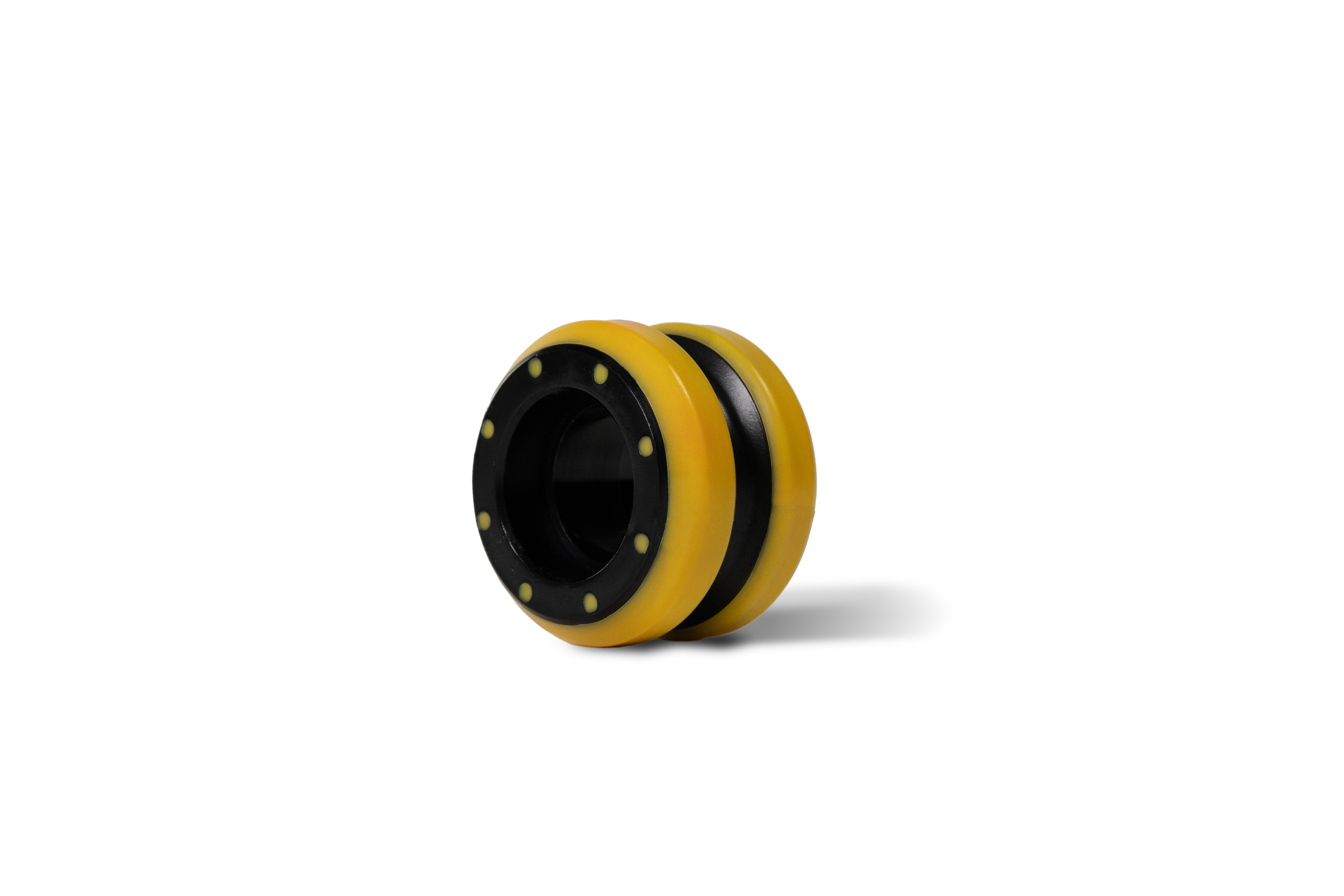
Heat-resistant PU (polyurethane) is a specially formulated polyurethane elastomer designed to maintain its mechanical properties for as long as possible, even at elevated temperatures. Polyurethane is created through the reaction of isocyanates and polyols. By carefully selecting raw materials and the formulation, properties such as hardness, elasticity, abrasion resistance, and temperature resistance can be tailored to the specific application.
Compared to conventional PU systems, heat-resistant or high-temperature-resistant types are designed to better withstand thermal stress. While many standard formulations are intended for moderate operating temperatures, special high-temperature polyurethanes can be used at significantly higher temperatures.
A fundamental distinction is made between thermoplastic polyurethane (TPU) and cross-linked polyurethane systems such as cast PU. TPU becomes increasingly soft and plastic as temperatures rise and can be reshaped. Cast PU, on the other hand, belongs to the cross-linked elastomers and is characterized by its dynamic-mechanical resistance. Heat-resistant polyurethane thus combines the typical advantages of urethane materials, such as high wear resistance and elasticity, with improved resistance to elevated temperatures. This makes it suitable for numerous industrial applications where heat and mechanical stress occur simultaneously.
How heat-resistant is polyurethane?
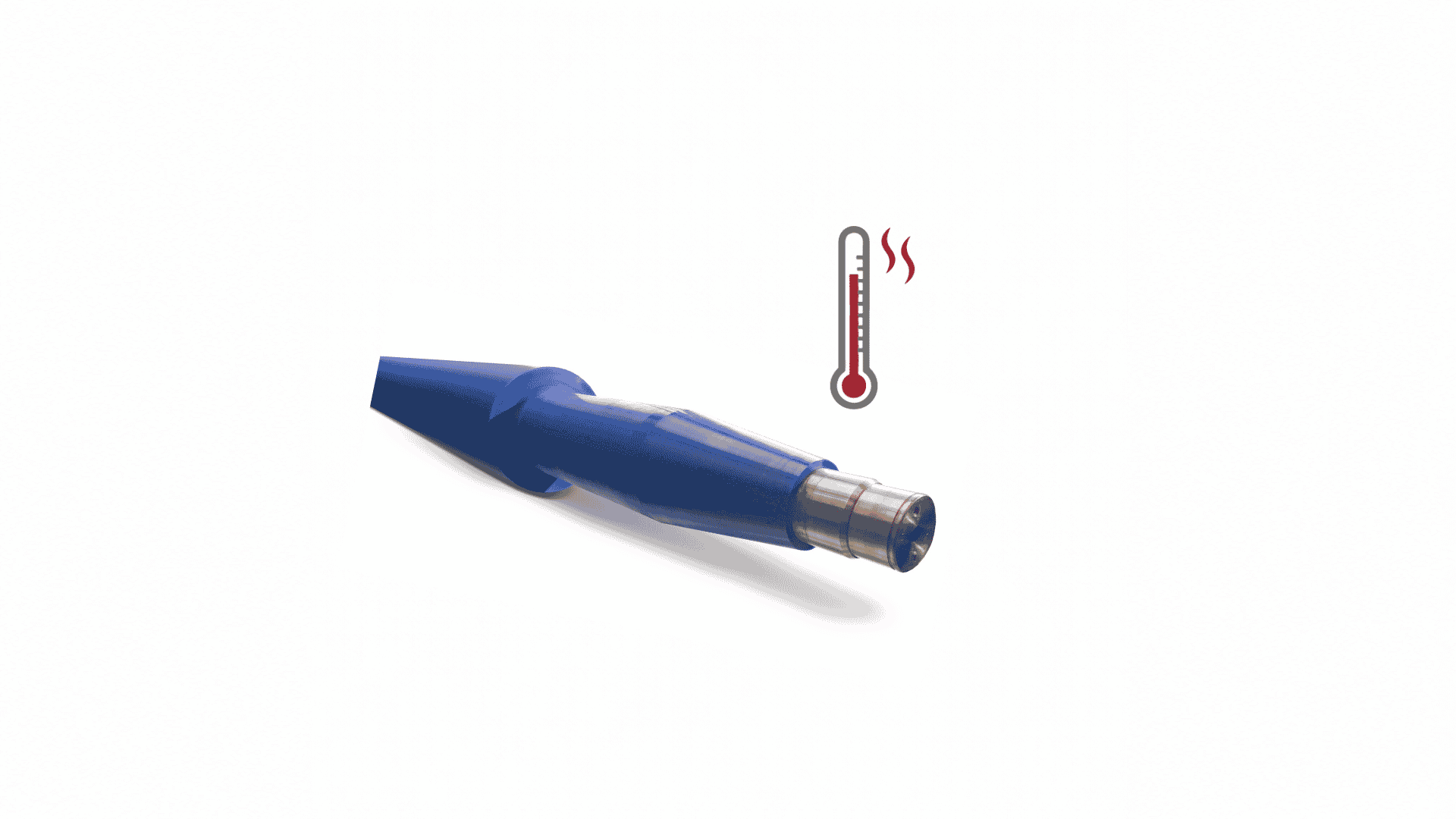
The temperature resistance of PU (polyurethane) depends heavily on the formulation used, the duration of the load, and the environmental conditions. Therefore, there is no universal temperature limit for all polyurethane materials. While many standard PU systems are designed for continuous operating temperatures of about 80 °C, heat-resistant polyurethane types can reach 120 to 140 °C continuously, depending on the formulation. An example of this is our Intec HI polyurethane material, which was developed for applications in the temperature range of -25 °C to 130 °C while offering high dynamic load capacity and good hydrolysis resistance. Typical areas of application include roller and wheel coatings and pump components.
The distinction between continuous and short-term load is crucial. A material can withstand a short-term temperature spike much better than permanent heat exposure. Even temperatures below the maximum permissible limit can lead to a reduction in mechanical properties over long-term exposure. As temperatures rise, properties such as strength, recovery characteristics, and wear resistance decrease.
For the practical design of rollers, wheels, or molded parts, considering temperature alone is not enough. Factors such as Shore hardness, dynamic load, contact media, exposure to hot water or steam, and the selection of the correct formulation for the specific application also play an important role.
Temperature ranges of different PU types
*Reference values. Actual temperature resistance depends on the formulation and application.
Continuous temperature vs. peak temperature – the important difference
When discussing the temperature resistance of PU, a distinction is often not made between continuous and peak temperature. However, this exact difference is critical. The continuous temperature describes the temperature to which a component can be exposed over a long period without its properties degrading to an unacceptable degree. The peak temperature , on the other hand, is a short-term load, such as during a process step or temporary overheating. For example, a polyurethane might withstand 150 °C for a short time, even though its recommended continuous operating temperature is significantly lower. For material selection in industrial applications, the actual continuous load should therefore always be considered, rather than just the maximum temperature peak.
Which factors influence the temperature resistance of PU?
A key influencing factor is the polyurethane formulation. The type of polyols, the isocyanate used, and the curing system significantly determine thermal stability. At INTERNORM, we rely on PU systems based on aromatic isocyanates, which are developed for technical applications and offer high mechanical load-bearing capacity. By precisely coordinating the formulation and degree of cross-linking, the material's properties can be adapted to specific requirements. As a result, high-temperature-resistant cast PU systems maintain their dimensional stability and performance for as long as possible, even at elevated temperatures.
The Shore hardness also plays an important role. Harder polyurethanes often react differently to heat than softer elastomers. However, a higher Shore hardness does not automatically mean higher temperature resistance. Rather, hardness, elasticity, and thermal stability influence one another. The optimal material selection therefore always depends on the specific application. You can find out more about this in our guide to Shore hardness of polyurethane.
Another decisive factor is the mechanical load during operation. Under continuous compressive, tensile, or dynamic stress, the permissible operating temperature often decreases. A PU material may function without issues at 120 °C when unloaded, but it may age significantly faster or lose its mechanical properties when subjected to constant load.
Equally important is the component's environment. Dry heat poses less of a challenge for many polyurethane systems than hot water or steam. Through hydrolysis, moisture and temperature can work together to attack the molecular structure and shorten the material's service life. Therefore, for applications in humid environments, not only temperature resistance but also the hydrolysis resistance of the PU system should be taken into account.
Properties of heat-resistant PU
Heat-resistant PU combines the typical advantages of polyurethane with improved resistance to elevated temperatures. Compared to many other elastomers, the material retains key mechanical properties over a long period, even under thermal stress.
Heat-resistant PU is characterized by good resistance to oils, greases, and numerous chemicals. This combination makes the material particularly interesting for industrial applications in mechanical engineering, conveyor technology, or roller coatings.
Another advantage is the high dimensional stability. Due to the cross-linking of the material, many cast PU systems exhibit low creep even at higher temperatures. This means that components under load retain their geometry for longer and are less prone to permanent deformation.
Despite these advantages, heat-resistant polyurethane also has its limits. As the temperature rises, the material's strength, hardness, and service life decrease. In addition, hot water, steam, or aggressive media can further accelerate aging. Therefore, the selection of the appropriate PU system should always be tailored to the specific application.
You can learn more about the properties and potential applications of polyurethane in our guide to PU materials.
Where is heat-resistant PU used?
Heat-resistant PU is used wherever high temperatures coincide with mechanical stress, wear, dynamic forces, or exposure to media.
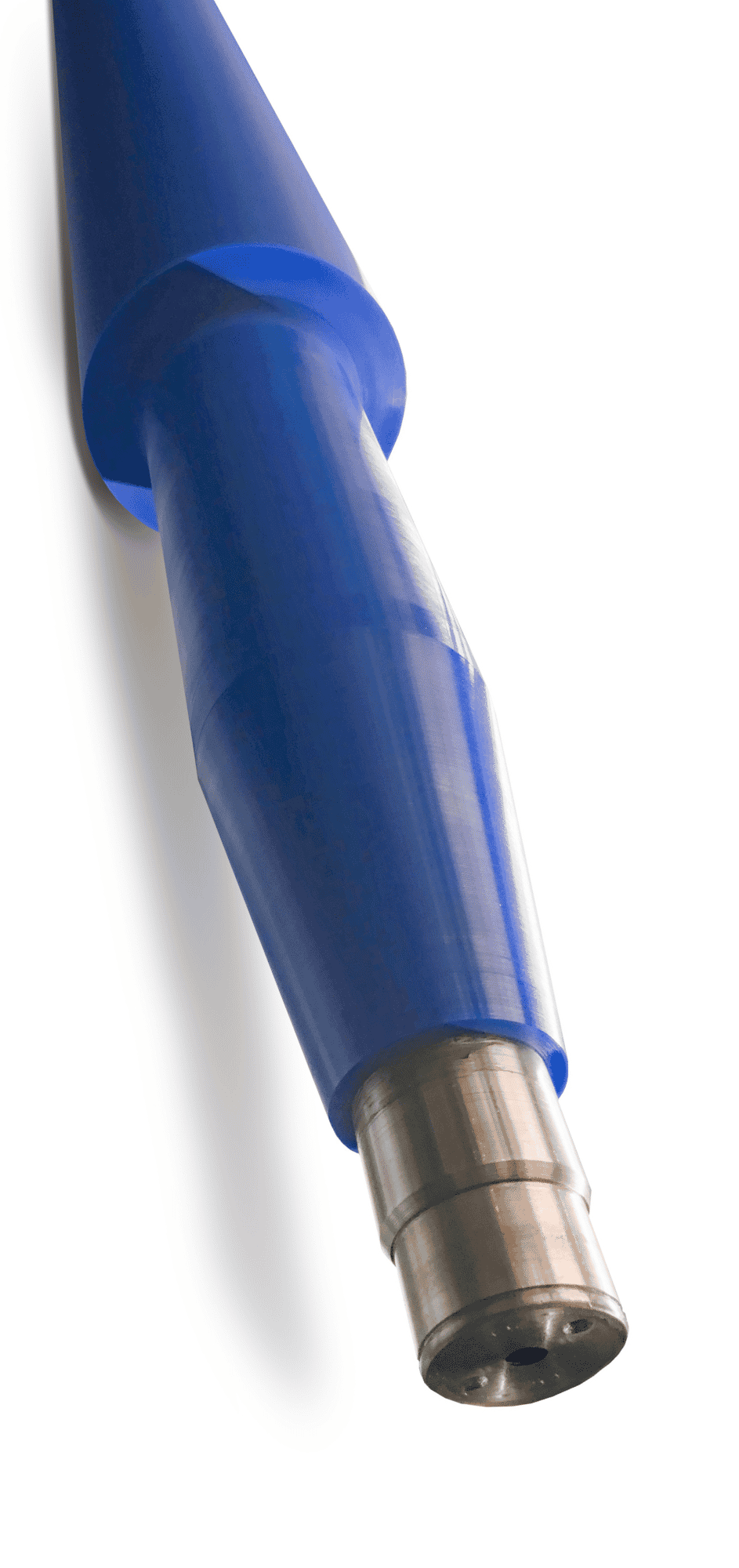
A typical area of application is rollers and wheels in heated processes. In the printing, laminating, packaging, or film industries, rollers are regularly exposed to elevated temperatures. At the same time, they must run precisely, withstand loads, and ensure a long service life. Heat-resistant PU coatings provide high wear resistance and dimensional stability here, even under demanding process conditions.
Furthermore, heat-resistant polyurethane is used for seals, stop buffers, and technical molded parts that are located near heat sources. Examples include machine housings, conveyor systems, drying plants, or production lines where permanently elevated temperatures occur. Components made of cast PU are also used in mechanical and plant engineering when conventional rubber materials reach their limits.
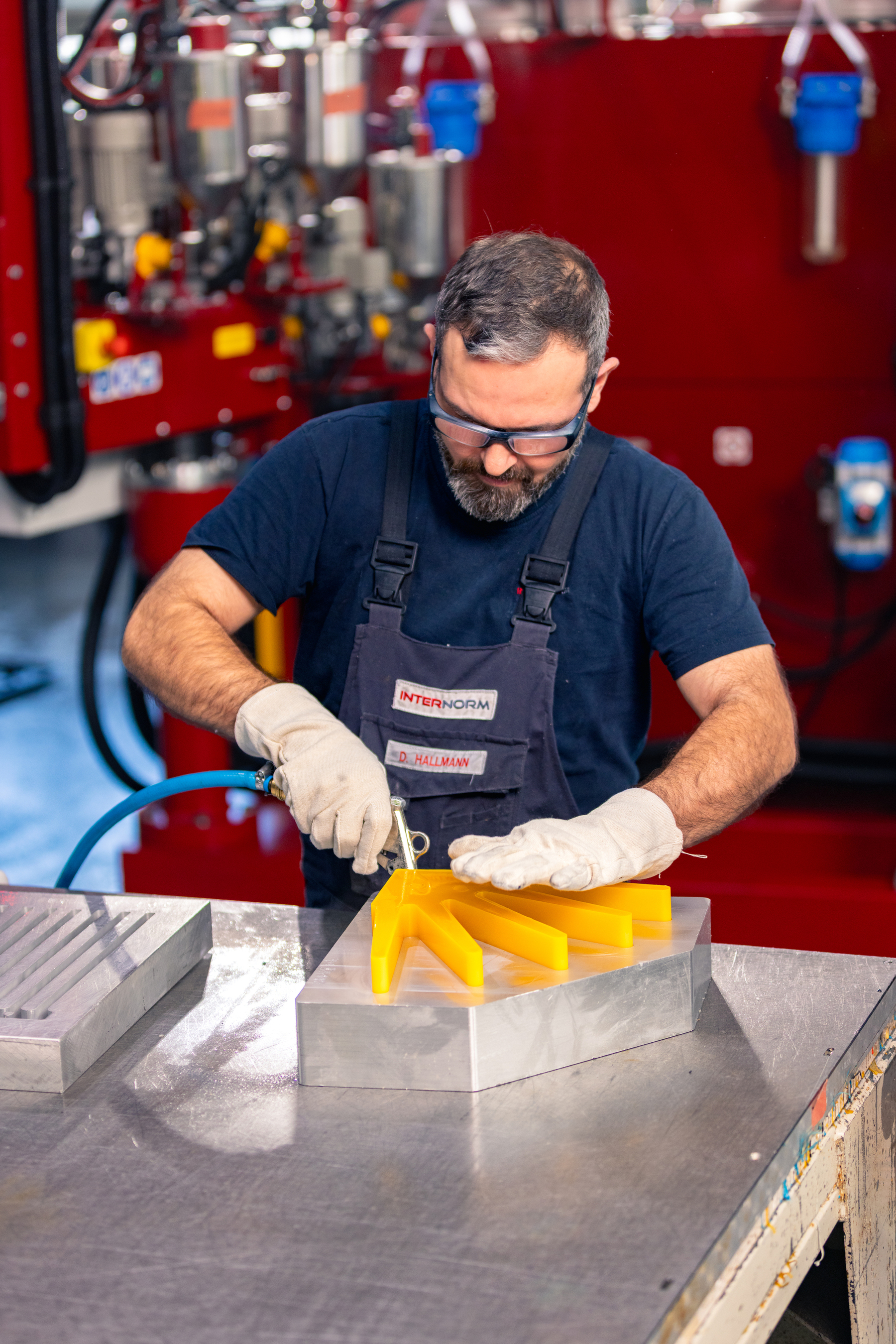
For optimal performance, however, selecting a heat-resistant material alone is not enough. The key is the right balance of temperature resistance, Shore hardness, and mechanical load capacity. At INTERNORM Kunststofftechnik, PU rollers, wheels, and molded parts are therefore designed for specific applications and manufactured from high-quality cast polyurethane. This allows the material to be precisely tailored to the requirements of the respective field of use, enabling it to leverage its strengths even under high thermal loads.
Are you looking for a temperature-resistant solution for rollers, wheels, or technical molded parts? Our experts will support you in selecting the right cast PU system for your application.
Heat-resistant PU compared to rubber and epoxy resin
Heat-resistant polyurethane demonstrates its strengths particularly in applications subject to thermal and mechanical stress. Compared to many rubber materials, PU offers significantly higher abrasion resistance and a lower tendency toward mechanical wear.
Epoxy resins and other thermosets, on the other hand, can offer advantages at very high temperatures. They are characterized by high dimensional stability and sometimes reach higher temperature limits than polyurethane. However, they are significantly less elastic and therefore often less suitable for applications involving impact or dynamic loads.
*Reference values. Actual operating limits depend on the formulation, load, and environmental conditions.
Limits of heat-resistant PU: Which plastic can withstand 300 °C?
Even heat-resistant polyurethane has physical limits. Depending on the formulation, high-quality PU systems can reach continuous temperatures of up to 140 °C, and special high-temperature materials can even withstand temperatures around 200 °C for short periods. However, polyurethane is generally not the suitable material for applications in the 300 °C range.
If temperatures of 300 °C or more are required continuously, other high-performance plastics are used. These include, for example, PTFE (polytetrafluoroethylene), PEEK (polyetheretherketone), polyimide (PI) or special silicone materials. These materials were developed specifically for extreme thermal stress and offer significantly higher temperature resistance than polyurethane.
However, higher temperature resistance is often associated with disadvantages. Many high-temperature plastics do not achieve the elasticity, damping properties, or abrasion resistance of polyurethane. Especially in applications involving dynamic loads, wear, or impact stress, PU can therefore be the more economical and technically sound solution despite its lower temperature resistance.
The question should therefore not be: "Which material can withstand the highest temperature?" but rather: "Which material best meets the requirements of the application?" If a component requires high abrasion resistance, elasticity, and durability in addition to temperature resistance, heat-resistant polyurethane is often the better choice than a pure high-temperature plastic.
Conclusion: Properly classifying heat-resistant PU
Heat-resistant PU bridges the gap between classic elastomers and high-temperature plastics. While many standard polyurethane systems reach their limits as temperatures rise, heat-resistant formulations retain their elasticity, dimensional stability, and abrasion resistance even under demanding thermal conditions. Depending on the material system, continuous operating temperatures of approximately 120 to 140 °C are possible.
However, the material name alone is not the deciding factor for actual temperature resistance. It is the interplay of formulation, Shore hardness, mechanical load, duration of use, and environmental conditions that determines how a PU component behaves in operation. Factors such as continuous load, hot water, steam, or chemical exposure in particular should be taken into account during material selection.
Maximum temperature alone is not sufficient for material selection. At INTERNORM, we take a holistic view of every application and tailor the PU formulation to the temperature, load, and environmental conditions. This results in individual polyurethane solutions that offer a long service life and process reliability even under demanding operating conditions.

FAQ
Here you will find direct answers to frequently asked questions.
How heat-resistant is PU?

Standard polyurethane is generally suitable for use up to approximately 80 °C. Heat-resistant PU grades can withstand 120 to 140 °C for short periods, and special systems can handle up to around 200 °C. The actual limit depends on the formulation, continuous mechanical load, and the environment (dry heat or steam).
Which plastic can withstand 300 degrees?
Polyurethane cannot withstand 300 °C on a continuous basis. PTFE, silicone, or PEEK are suitable for such high temperatures. However, PU remains superior when abrasion resistance and elasticity are required in the medium temperature range.
Is cured epoxy resin heat-resistant?
Cured epoxy resin is dimensionally stable and, depending on the type, resistant up to around 120–200 °C, but it is more brittle than PU. Where elasticity and abrasion resistance matter, heat-resistant polyurethane is usually the better choice.
Is the PU coating heat-resistant?
PU coatings are permanently resistant up to approximately 80 to 100 °C, with heat-resistant systems offering higher limits accordingly. They can withstand more under short-term stress than in continuous use. For hot processes, the coating should be specifically designed for the operating temperature.