PE at a glance
Polyethylene (PE) is the most widely used plastic in the world, accounting for around 38% of global plastic consumption. As a semi-crystalline thermoplastic from the polyolefin group, PE is characterized by a broad spectrum of properties. The specific PE type is the deciding factor: PE-LD, PE-HD, PE-LLD, and PE-UHMW differ significantly in terms of strength, flexibility, wear behavior, and temperature resistance.
What is polyethylene? Structure and classification
Polyethylene is a semi-crystalline thermoplastic from the polyolefin group, produced by the polymerization of the monomer ethylene. It consists of long chains of carbon and hydrogen atoms, whose crystallinity and density significantly determine the material's final properties.
The abbreviation for polyethylene is PE. Chemically, it is a high-molecular-weight alkane formed by linking numerous ethylene molecules. Along with polypropylene, PE is one of the most important polyolefins in the plastics industry.
A characteristic feature of polyethylene is its semi-crystalline structure. The material's properties are largely determined by the molecular structure formed during the polymerization of ethylene. Depending on the process, polymer chains with varying degrees of branching are created. While chains with fewer branches can be packed more densely and achieve higher crystallinity, extensive branching makes it difficult for the molecules to arrange themselves regularly. This alters the crystallinity, density, and ultimately the material properties. Polyethylene with a higher density generally exhibits greater stiffness, strength, and chemical resistance. This relationship explains why different PE types differ significantly despite having the same basic chemical structure.
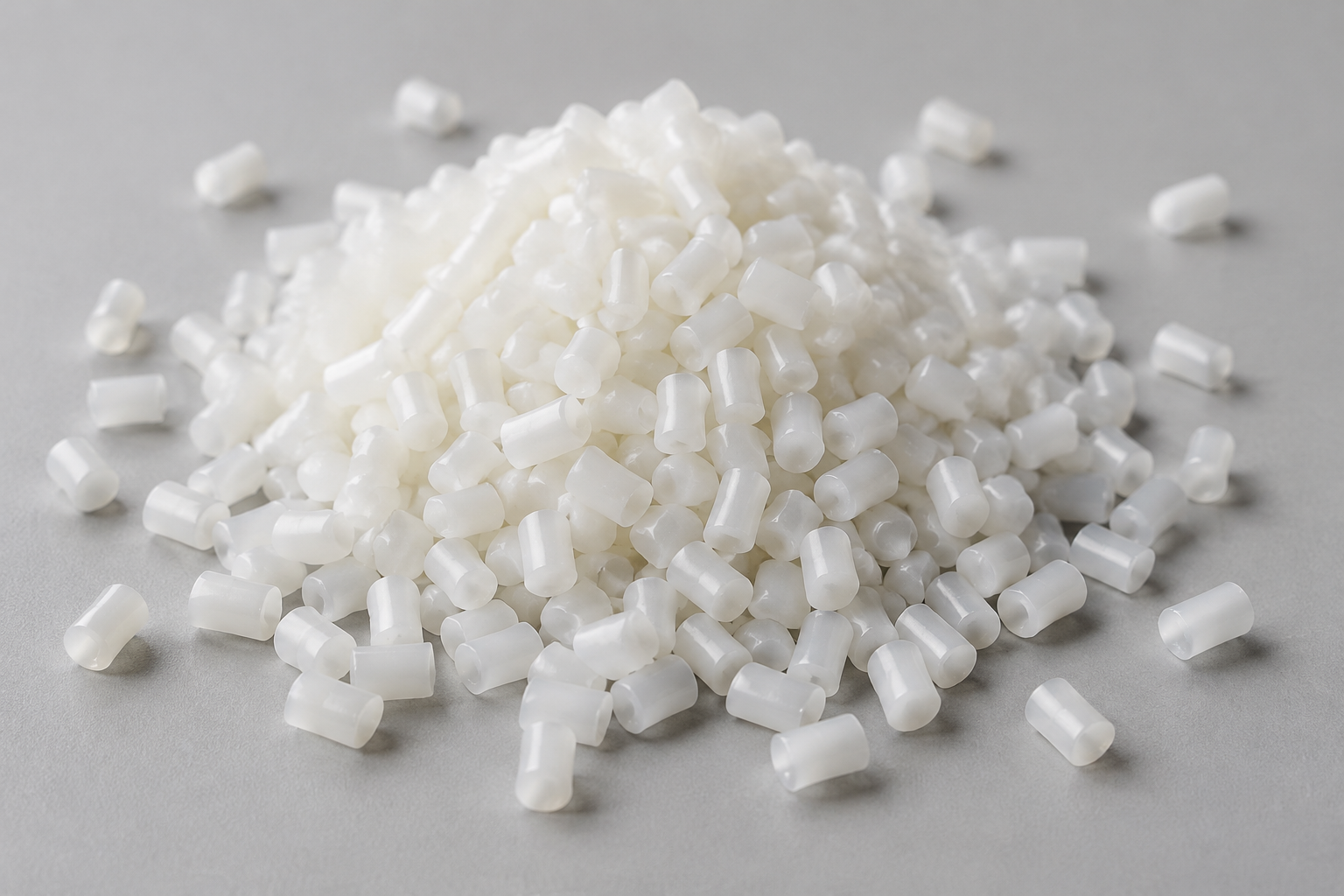
Visually, PE usually appears milky to slightly cloudy. The surface has a waxy feel and is relatively easy to scratch.
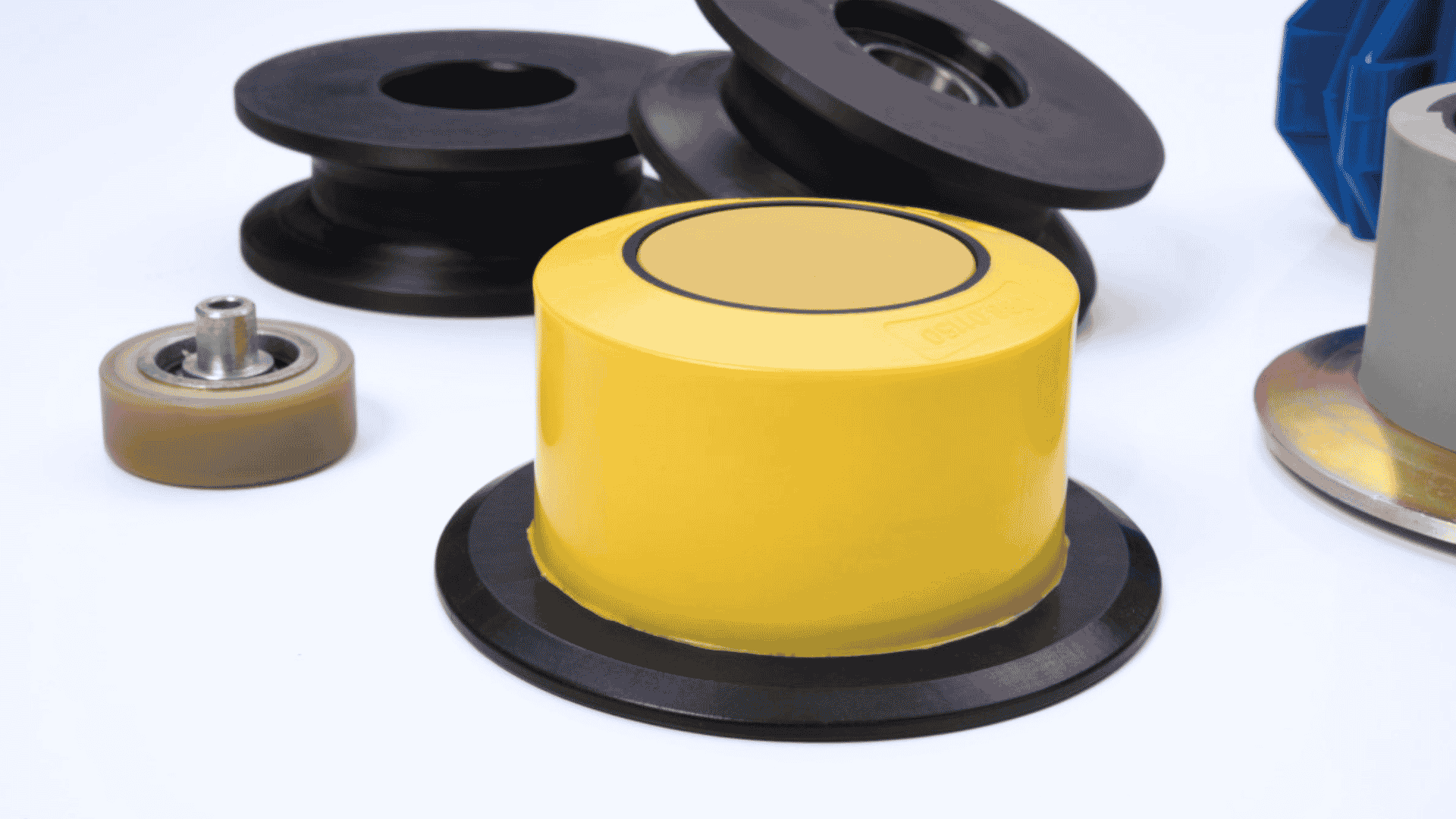
Overview of PE types: PE-LD, PE-LLD, PE-HD, and PE-UHMW
The properties of polyethylene are largely determined by its density, degree of branching, and molecular weight.
Key values of the most important PE types
PE-LD (Low Density Polyethylene) is produced using a high-pressure process and is characterized by high flexibility and good processability.
PE-LLD (Linear Low Density Polyethylene) has a linear molecular structure with short side chains and offers higher tear resistance than PE-LD.
PE-HD (High Density Polyethylene) is produced using a low-pressure process. Due to its higher density, it is harder, stiffer, and more mechanically resilient.
PE-UHMW (Ultra High Molecular Weight Polyethylene) or PE-1000 represents the most technically sophisticated variant. The material possesses the highest abrasion resistance of all thermoplastics, excellent sliding properties, and exceptional impact strength.
What do PE 300, PE 500, and PE 1000 mean?
In technical environments, trade names are frequently used:
- PE 300 = PE-HD
- PE 500 = high-density PE with improved wear characteristics
- PE 1000 = PE-UHMW
These numbers do not refer directly to density, but rather serve as a practical classification for technical polyethylene materials.

Properties of Polyethylene
The Properties of Polyethylene vary depending on the type, but they do share some common characteristics.
Mechanical properties: Polyethylene has relatively low strength, hardness, and stiffness, but offers high ductility and impact strength. In addition, it has very low sliding friction. A key design consideration is its tendency toward creep deformation under constant load, which is why load and duration of use must always be considered together.
Chemical properties: PE is resistant to most acids, alkalis, and numerous solvents. At the same time, the material absorbs virtually no water. This property makes polyethylene particularly attractive for damp or chemically demanding environments.
Thermal properties: Depending on the type, the permissible continuous operating temperature is between approximately 80 and 100 °C. You can find details on this in the section on PE temperature resistance.
Electrical properties: With a dielectric constant of approximately 2.4, polyethylene acts as an excellent electrical insulator. This is why it is frequently used for cable sheathing and electrical insulation applications.
Temperature resistance of polyethylene: continuous use and limitations
ThePE temperature resistanceis approximately 100 °C for PE-HD, 80 °C for PE-LD and, depending on the type, between 30 and 90 °C for PE-LLD.
A distinction must be made between continuous service temperature, short-term exposure, and melting point. PE-HD only begins to melt in the range of approximately 130 °C. However, this does not mean that the material remains durable at these temperatures for long periods.
A particular strength of PE lies in the low-temperature range. The glass transition temperature is around −125 °C, which means the material remains impact-resistant even in extreme cold. This is a key advantage for cold storage facilities, outdoor applications, or winter use. A special position is held by PE-X (cross-linked polyethylene). Cross-linking significantly improves temperature resistance.
Variants include:
- PE-Xa (peroxide)
- PE-Xb (silane)
- PE-Xc (electron beam cross-linking)
- PE-Xd (azo process)
Is HDPE food-safe?
PE-HD is food-safe, provided the specific material grade used has been explicitly approved for food contact.High-density polyethylene is manufactured worldwide for applications involving direct contact with food. These include cutting boards, beverage bottles, canisters, food containers, and produce packaging.
The polymer itself consists exclusively of carbon and hydrogen and contains no plasticizers. However, the decisive factor for food safety is not the base polymer, but rather the additives, colorants, and processing aids used.
For the European market, the EU Regulation 10/2011 applies, and for the USA, the FDA 21 CFR. In addition, the prescribed migration limits must be observed. The overall migration limit is10 mg/dm²contact surface.
For processors and users, the most important document is the Declaration of Compliance, which documents adherence to legal requirements. An HDPE product is generally considered food-grade if:
- a food compliance declaration is available,
- it has been tested in accordance with EU Regulation 10/2011 or comparable regulations,
- it is marked with the glass and fork symbol, or
- the manufacturer explicitly confirms its suitability for food contact.
Polyethylene usage: Applications by PE type
The use of polyethylene depends heavily on the specific type. Although all variants are based on the same basic chemical structure, they differ significantly in their properties.
PE-LD and PE-LLD: Flexible films and insulation applications
PE-LD (Low Density Polyethylene) and PE-LLD (Linear Low Density Polyethylene) are primarily used where flexibility and tear resistance are required. Typical applications include packaging films, shrink films, agricultural films, and trash bags. Furthermore, both materials are used for cable sheathing and as insulation material in electrical engineering. PE-LLD, in particular, offers higher puncture and tear resistance compared to PE-LD, which is why it is frequently used for more technically demanding films.
PE-HD: The all-rounder for containers, pipes, and technical components
PE-HD (High Density Polyethylene) is characterized by higher density and rigidity. This makes the material suitable for applications with higher mechanical requirements and constant contact with moisture or chemicals. Typical areas of application:
- Bottles and canisters
- IBC containers up to 1,000 liters
- Drinking water and sewage pipes
- Injection-molded parts
- Chemical containers
- Technical molded parts
Thanks to its high chemical resistance and low water absorption, PE-HD is one of the most important materials in plant engineering, the food industry, and industrial conveyor technology.
PE-UHMW: Specialist for wear and sliding applications
PE-UHMW (Ultra High Molecular Weight Polyethylene), often referred to as PE-1000, holds a unique position within the PE family. Due to its extremely high molecular weight, the material possesses exceptional abrasion resistance and excellent sliding properties. Typical applications:
- Slide rails
- Chain guides
- Guide profiles
- Scrapers
- Wear strips
- Silo and bunker linings
- Conveyor technology components
In conveyor technology in particular, companies benefit from low friction and minimal wear. At the same time, PE-UHMW reduces noise levels and extends the service life of system components.
PE, PP, PET, and PEG — common points of confusion
The abbreviations PE, PP, PET, and PEG are frequently confused with one another. In reality, however, these are distinct plastics or polymer groups with properties and applications that can differ significantly.
PE vs. PP: Both belong to the polyolefin group. Polypropylene (PP) is stiffer, harder, and more temperature-resistant. Polyethylene, on the other hand, is tougher, more impact-resistant in cold temperatures, and has better sliding properties.
PE vs. PET:Polyethylene terephthalate (PET) is a polyester, not a polyolefin. Typical applications include beverage bottles and technical films.
PE vs. PEG:Polyethylene glycol (PEG) is water-soluble and is primarily used in pharmaceuticals, cosmetics, and medical technology. It is not an engineering material.
Conclusion: Polyethylene at a glance
Polyethylene is not a single type of plastic, but an entire family of materials. Its specific properties are largely determined by density, molecular weight, and crystallinity. While PE-LD and PE-LLD are primarily used for flexible films, PE-HD is suitable for technical components and containers. PE-UHMW, or PE-1000, is the top choice for components subject to wear and sliding friction.
The primary operational limit of polyethylene is its temperature resistance, which is approximately 80 to 100 °C in continuous use. When selecting a material, factors such as temperature and mechanical load should be considered alongside wear, chemical exposure, food safety compliance, and manufacturing processes.
To successfully utilize polyethylene, one should not simply select "PE" as a material, but specifically determine the appropriate PE type for the application at hand. Making the right material choice increases the service life of components, reduces maintenance requirements, and improves long-term cost-efficiency.

FAQ
Here you'll find direct answers to frequently asked questions.
What is polyethylene used for?

Polyethylene is primarily used for films, packaging, pipes, and containers. PE-LD is mainly used for films, while PE-HD is used for blow-molded hollow bodies, pipes, and injection-molded parts. In technical applications, PE-HD and PE-UHMW are used for sliding elements, wear protection, scrapers, and components that come into contact with chemicals.
What are the disadvantages of polyethylene?
Polyethylene has low strength and stiffness, tends to creep under continuous load, and can only be used continuously up to about 80 to 100 °C. Furthermore, due to its non-polar surface, it is difficult to bond or print on without prior surface treatment.
Is PE toxic?
Polyethylene consists exclusively of carbon and hydrogen and is considered physiologically harmless. It contains no plasticizers. When it comes to food contact, the decisive factors are not the polymer itself, but rather additives, colorants, and processing aids. Therefore, a declaration of compliance according to EU Regulation 10/2011 is required.
Which is better, PE or PP?
Neither material is generally better. PP is stiffer, harder, and more temperature-resistant, with a range of about 100 to 110 °C. PE, on the other hand, is tougher, impact-resistant even in cold temperatures, and has better sliding properties. For wear and sliding applications, PE-UHMW is often the preferred choice.
What is the temperature resistance of PE?
PE-HD can be used continuously up to about 100 °C, and PE-LD up to about 80 °C. The melting range of PE-HD begins at around 130 °C. Cross-linked polyethylene (PE-X) can withstand continuous temperatures of approximately 95 to 110 °C, which is why it is frequently used for heating and drinking water pipes.