PA zusammengefasst
Polyamide (PA) is a group of semi-crystalline thermoplastics known by the trade names Nylon or Perlon. The term refers to two distinct worlds of application: synthetic fibers for textiles and engineering plastics for high-stress components. This page covers polyamide as a material for industrial components. You will learn about its key characteristics, the available PA types, its temperature resistance, and what to consider during component design.
What is polyamide? Definition and chemical structure
Polyamide (PA) is the term for a group of synthetic polymers whose long polymer chains are built from monomers and linked by amide groups. Due to their high strength, toughness, wear resistance, and good processability, they are used both as engineering materials and as synthetic fibers.
Polyamide owes its name to the amide groups (-CONH-) in its molecular structure. These create hydrogen bonds between the polymer chains. These very intermolecular forces explain two of the material's typical properties: high mechanical strength and the ability to absorb moisture.
The most well-known types include polyamide 6 (PA 6) and polyamide 66 (PA 66). Both are semi-crystalline thermoplastics, but they differ in their thermal properties and processing behavior.
- PA 6 is produced from ε-caprolactam.
- PA 66 is produced from hexamethylenediamine and adipic acid.
- In polyamide 6 (PA 6), the "6" stands for the six carbon atoms in the monomer used.
- In polyamide 66 (PA 66), the two sixes refer to the two starting components, hexamethylenediamine and adipic acid, each of which contains six carbon atoms.
Polyamide is relevant both as a fiber material and as an engineering construction material. The well-known terms Nylon and Perlon are often used synonymously. In fact, these are historical trade names for different PA types:
- Nylon originally refers to PA 66.
- Perlon originally refers to PA 6.
Even though they are often confused: Nylon and Perlon are not independent materials, but specific types of polyamide.
In addition to PA 6 and PA 66, there are other types, including:
- PA 12
- PA 46
- PA 610
- PA 612
In addition, numerous modified variants are available, such as glass-fiber reinforced or impact-modified polyamides. Depending on the composition, the material can be specifically tailored to the requirements of an application. This makes polyamide suitable for both highly stressed structural parts and wear-prone components in dynamic applications.
Polyamide as a fiber or as an engineering material? The most important distinction
Polyamide is often associated with synthetic textile fibers, but its versatile molecular structure and various processing options make it equally attractive as a technical engineering material.
Polyamide is therefore the same polymer in two different worlds of application.
Under trade names such as Nylon, it is used for sportswear, swimwear, hosiery, outdoor jackets, and technical fabrics, for example. The fiber is also found in sails and parachutes. Here, properties such as tear strength, elasticity, and low weight are the primary focus.
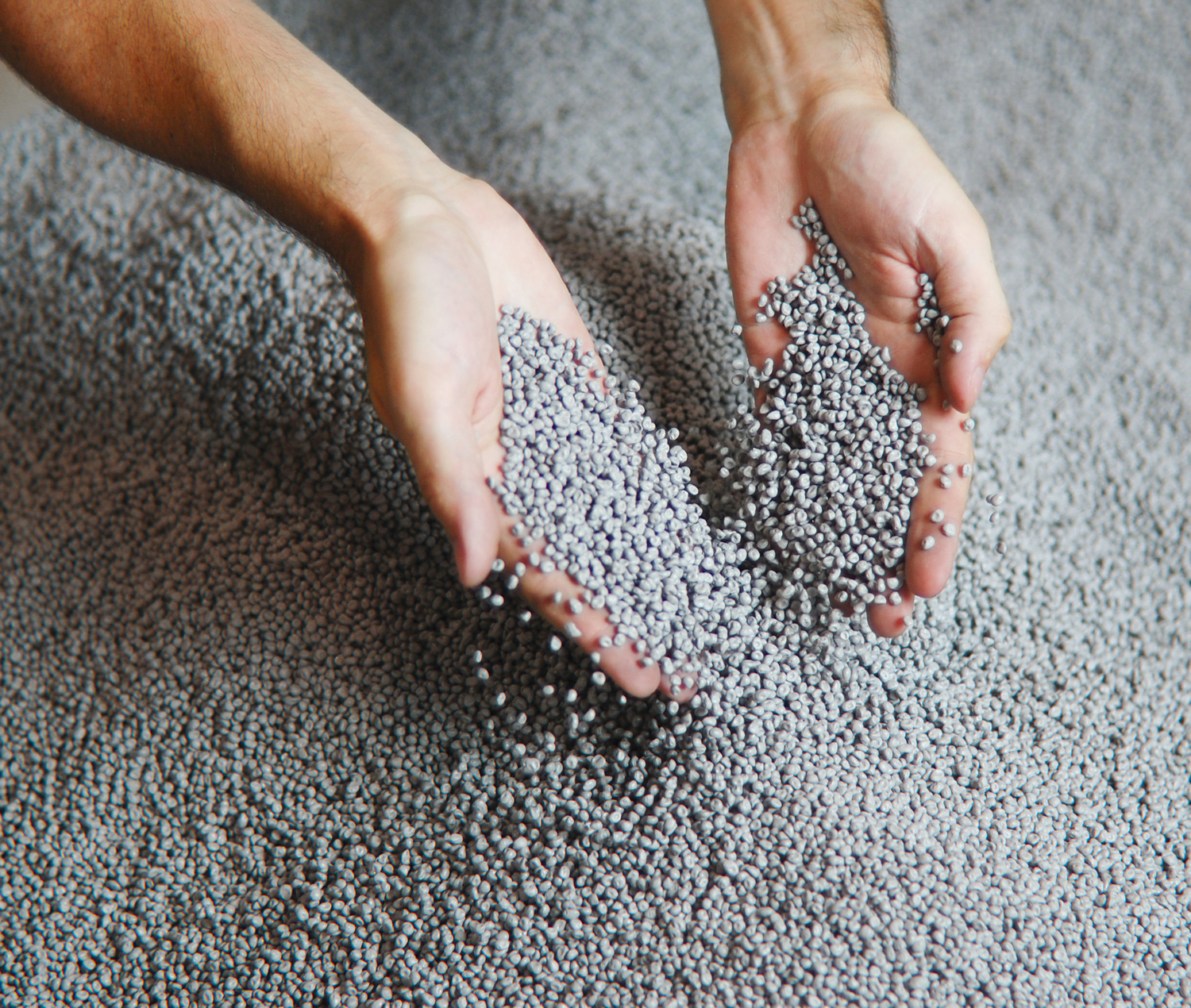
In industry, however, polyamide is used as a technical engineering material. Injection molding of the granulate produces molded parts such as gears, rollers, or machine components. The decisive factors here are mechanical properties such as strength, dimensional stability, chemical resistance, long-term durability, and wear resistance.
Particularly in mechanical and plant engineering, polyamide has established itself as an alternative to metal. Many components benefit from the material's weight reduction, lower wear, and good damping properties.
While properties like tear strength and elasticity are important in the textile industry, tensile strength, wear resistance, and temperature resistance are the focus in industrial applications. The following sections look exclusively at technical applications.
Overview of polyamide properties
Polyamide (PA) is one of the most important engineering plastics and is characterized by a balanced property profile. The combination of mechanical strength, wear resistance, and chemical resistance makes the material attractive for numerous industrial applications.
Mechanical properties
Polyamide offers high strength, stiffness, and toughness. This makes the material suitable for structural components that are permanently exposed to mechanical loads, impacts, or dynamic forces. At the same time, its good toughness ensures that components remain resilient even under demanding operating conditions.
Tribological properties
In the tribological field, polyamide impresses with good sliding properties, high wear resistance, and limited dry-running capability. Due to its comparatively low friction, the material is suitable for guides, sliding elements, rollers, or bearing components. Especially with moving parts, this can reduce maintenance requirements and wear.
Chemical properties
Polyamide has very good resistance to many oils, greases, fuels, and lubricants. This makes the material a frequent choice for machines, systems, and technical equipment that regularly come into contact with such substances. Its excellent oil resistance, in particular, contributes to a long service life for components.
Limitations and disadvantages from a material perspective
Like any engineering plastic, polyamide has material-related limitations. The material is sensitive to strong acids and oxidizing agents, which can damage the polymer structure. In addition, PA absorbs moisture from the environment, which can affect dimensions, strength, and stiffness depending on the application. These properties should be taken into account during material selection and design to ensure long-term reliable performance.
Today, polyamide is found in almost every industrial sector.
Conveyor technology
In conveyor systems, for example, polyamide is used for guide rails, chain guides, slide rails, and rollers.
Mechanical engineering
In mechanical engineering, it is used to manufacture items such as gears, covers, and bearing elements.
Agricultural technology
Agricultural machinery operates under demanding conditions involving dirt, dust, moisture, and fluctuating temperatures. Polyamide provides the necessary robustness for many components in this environment.
Automation and plant engineering
Automated production facilities require precise and durable plastic components. Polyamide enables cost-effective solutions for both moving and statically loaded parts.
Food and packaging industry
Special types of polyamide can be used for applications with high requirements for hygiene, wear resistance, and mechanical load-bearing capacity.
Polyamide types: A comparison of PA 6, PA 66, PA 12, and PA 46
Choosing the right type of polyamide is critical to the performance of the component.
Decision-making guide
- PA 6: cost-effective standard material
- PA 66: higher stiffness and heat resistance
- PA 12: low water absorption and high flexibility
- PA 46: high thermal resistance
Key trade names
Cast polyamide (PA 6 G) as a special case
Cast polyamide is polymerized directly from the monomer rather than extruded. This results in higher crystallinity and often better strength values. In addition, it allows for the production of large semi-finished products that can be machined later. For massive wear parts, guides, and large-scale mechanical engineering components, PA 6 G is often an attractive alternative.
Polyamide temperature resistance: continuous service, melting point, and limits
The temperature resistance of polyamide depends on which parameter is being considered.
- Continuous service temperature PA 6 / PA 66: approx. 80 to 100 °C
- Glass-fiber reinforced types: approx. 120 to 150 °C
- Melting point: approx. 220 to 260 °C, depending on the type
For design engineers, the decisive factor is not the melting point, but the temperature at which the component can be operated continuously under load.
It is important to distinguish between:
- Continuous service temperature
- Heat deflection temperature (HDT)
- Melting point
Short-term temperature spikes above the continuous service temperature are often possible, but they will shorten the service life.
Low temperatures must also be taken into account. Polyamide is generally suitable for use down to approximately -40 °C. However, impact strength may decrease in a dry state.
For high-temperature applications, the following are frequently used:
- heat-stabilized PA grades
- glass-fiber reinforced compounds
- PA 46
are used.
Moisture absorption: Why polyamide changes its properties
Moisture absorption is the most significant characteristic of polyamide.
This is caused by the amide groups in the polymer structure. They can bind water molecules and store them within the material. As a result, polyamide changes over the course of its service life.
Typical water absorption under standard atmospheric conditions:
This leads to three important consequences:
1. Dimensional change
The component absorbs moisture and increases in size. For tight tolerances, this effect must be taken into account during the design phase.
2. Loss of stiffness
The modulus of elasticity decreases as moisture content increases. The material becomes softer and less rigid.
3. Increase in toughness
At the same time, impact strength increases. Polyamide becomes less brittle and more resistant to impact loads.
Conditioning
Many technical components are specifically conditioned. This involves setting a defined moisture level so that dimensions and properties correspond to their intended use.
Practical rule: Always check data sheet values to see whether they apply to the dry or conditioned state. The differences can be significant and frequently lead to misinterpretations.
Polyamide usage: typical components and industries
Polyamide is one of the most frequently used engineering plastics in mechanical and plant engineering. Thanks to its high strength, good wear resistance, and relatively low density, the material is suitable for numerous functional components. With a density of approximately 1.0 to 1.15 g/cm³, PA is significantly lighter than steel at around 7.85 g/cm³ or aluminum at about 2.7 g/cm³. This allows for components with significant weight advantages, enabling them to be used as a metal replacement in many applications.
Power transmission
Polyamide is frequently used for components that transmit forces and motion. Typical applications include:
- Gears
- Timing belt pulleys
- Sprockets
Due to its high strength and good wear resistance, these components can operate reliably even under dynamic loads. At the same time, the lower weight compared to metal results in reduced mass inertia and often quieter operation.
Bearing and guiding
In the field of bearings and guides, polyamide leverages its excellent tribological properties. Common components include:
- Plain bearings
- Bushings
- Guide rails
- Guide rollers
Excellent sliding properties and high abrasion resistance ensure a long service life, even during continuous movement. In many applications, this also helps reduce the need for lubricants and lowers maintenance requirements.
Housing and structural parts
Polyamide is also widely used for structural components. These include, for example:
- Pump housings
- Machine covers
- Brackets
- Support and structural components
This is where glass fiber-reinforced polyamides are frequently used. The reinforcement increases stiffness, strength, and dimensional stability, allowing even highly stressed components to be manufactured economically from plastic.
Fluid handling
For the transport of liquids or gases, polyamide types such as PA 12 are used in particular. Typical applications include:
- Pipes
- Hoses
- Fittings
- Pneumatic lines
PA 12 is characterized by high flexibility, good chemical resistance, and low moisture absorption. This makes the material particularly suitable for demanding industrial fluid handling systems.
Fasteners
Polyamide is also a proven material for numerous fastening solutions. These include, among others:
- Cable ties
- Clips
- Wall plugs
- Fasteners for panels and conduits
The combination of strength, elasticity, and weather resistance makes polyamide particularly suitable for such applications.
Polyamide as a metal substitute
In many industrial applications, polyamide has established itself as a cost-effective metal substitute. The difference in density compared to steel and aluminum provides a decisive advantage: components can be made up to 85% lighter than comparable steel parts.
Users also benefit from additional advantages:
- Corrosion resistance
- Good vibration and noise damping
- High wear resistance
- Easy processing
- Potential cost advantages in series applications
- Unlike metals, it is also electrically insulating
This makes polyamide particularly suitable for components where weight, wear resistance, and cost-effectiveness play a crucial role. Especially in mechanical engineering, conveyor technology, and automation, the material offers numerous opportunities to effectively replace metallic components. It is also used in the electrical industry because it is a very poor conductor of electricity—for example, in connectors and cable components.
Glass-fiber reinforced polyamide: when PA6-GF30 is worth it
For many industrial applications, unreinforced polyamide is sufficient. However, when higher demands are placed on strength, rigidity, and dimensional stability, PA6-GF30 is often used. This is polyamide 6 with a 30% glass fiber content, which significantly improves the material's mechanical properties.
PA6-GF30 is now one of the most important engineering materials in mechanical and plant engineering and is used wherever high loads occur and weight needs to be saved at the same time. Reinforced polyamide is typically used for fan impellers, gear housings, machine covers, conveyor components, or agricultural machinery parts.
What does PA6-GF30 mean?
The designation is broken down as follows:
- PA 6 = Polyamide 6
- GF = glass fiber reinforcement
- 30 = 30% glass fiber content
The incorporated glass fibers reinforce the plastic matrix. This results in components with significantly higher rigidity and load-bearing capacity than unreinforced polyamide.
Common reinforcement levels are:
- GF15
- GF30
- GF50
When is PA6-GF30 worth using?
Glass fiber reinforced polyamide is often the right choice when:
- high loads occur
- high rigidity is required
- elevated temperatures are present
- dimensional stability is critical
- metal is to be replaced
What are the disadvantages of glass fiber reinforced polyamide?
From a material perspective, it should be noted that glass fiber reinforcement does not only offer advantages. Compared to unreinforced polyamide, impact strength often decreases slightly, while the material surface becomes more abrasive. For sliding applications or bearings, other types of polyamide or specially modified materials are therefore often used.
In addition, exposed glass fibers can lead to increased wear on moving contact surfaces. Therefore, the choice of material should always be tailored to the specific application.
Processing: injection molding, cast polyamide, and machining
Polyamide can be processed in various ways. The method depends primarily on the quantity, component size, geometry, and the technical requirements of the application. In the industry, the following have become particularly well-established: injection molding,cast polyamide as well as machining of semi-finished products have become established.
Injection molding is by far the most important processing method for medium and large production volumes. In this process, plastic granules are melted and injected under pressure into a mold, where the component takes on its final shape.
Processing temperatures depend on the type of polyamide. Depending on the material, typical melt temperatures range between approximately 220 °C and 300 °C. Glass-fiber reinforced variants such as PA 6-GF30 are often processed in the upper temperature range.
A key success factor: pre-drying
A critical point in the processing of polyamide is frequently underestimated in practice: the pre-drying of the granules.
Polyamide is a hygroscopic plastic. This means that the material absorbs moisture from the ambient air. Even small amounts of water in the granules can lead to problems during the injection molding process.
Typical consequences of insufficiently dried material include:
- Streaks and surface defects
- Silver streaks in the component
- Reduced mechanical strength
- Decreased impact strength
- Inconsistent component quality
- Increased scrap rates
Proper drying before processing is therefore one of the most important quality factors in the entire process. In many cases, it is the classic practical error when components fail to achieve the expected mechanical properties.
Accounting for shrinkage and warpage
Like other semi-crystalline plastics, polyamide shrinks as it cools after injection molding. This so-called shrinkage must be taken into account during the mold design phase.
In addition, warping can occur due to varying wall thicknesses, fiber orientations, or uneven cooling.
Post-shrinkage due to moisture absorption
A unique characteristic of polyamide is that dimensional changes do not end upon demolding. Because the material absorbs moisture from its environment, its equilibrium state changes over time.
This moisture absorption can lead to a slight increase in volume. Designers often refer to this as post-shrinkage or dimensional post-adjustment due to conditioning. For high-precision components, these effects must be taken into account during the development phase.
Cast polyamide for large and highly stressed components
In addition to injection-molded polyamides, industry frequently uses cast polyamide (PA6G) . The material is not processed as granules; instead, it is produced via a casting process and subsequently offered as block, plate, or rod stock.
Typical applications include large gears, rollers, or sliding elements. Especially for large individual parts or small production runs, cast polyamide is often more cost-effective than a complex injection mold.
Machining of polyamide
Polyamide is very well-suited for machining. Turning, milling, drilling, or sawing operations can be performed without difficulty, enabling the economical production of individual parts as well as small and medium-sized series.
At the same time, properties typical of polyamide, such as thermal expansion and moisture absorption, must be considered to reliably maintain tight tolerances.
Conclusion: Using polyamide correctly as a material
Polyamide is one of the most versatile engineering plastics, combining high strength, good wear resistance, and low weight. At the same time, PA is much more than a single material: depending on the type, properties such as temperature resistance, water absorption, or flexibility differ significantly. Therefore, material selection should always be tailored to the specific application.
For the successful design of a PA component, two factors are particularly decisive: the continuous service temperature and the moisture absorptionWhile reinforced polyamides can be used at elevated temperatures, moisture affects the dimensional stability, stiffness, and toughness of the component. These effects should be taken into account during the design and material selection phase.
Whether it is PA 6 as an economical standard material, PA 66 for higher thermal loads, PA 12 for moisture-sensitive applications, or glass-fiber reinforced types for maximum stiffness: the optimal solution only emerges from the interaction of material, component geometry, and manufacturing process.
The best decision is therefore not made by selecting a plastic, but by considering the requirements, PA type, and manufacturing process together. This is how durable, economical, and high-performance plastic components can be realized.

FAQ
Here you'll find direct answers to frequently asked questions about polyurethane (PU/PUR).
Is polyamide a plastic or a fiber?

Both. Polyamide refers to a group of materials or a polymer class from which both synthetic fibers for textiles and engineering plastics for mechanical engineering applications are produced. A large portion of the polyamides produced are processed into fibers, while engineering polyamides are used as granules for injection-molded parts, semi-finished products, or cast polyamides. The same base polymers are therefore used for gears, plain bearings, guides, or housings as they are for nylon fibers.
Is polyamide the same as nylon?
Not exactly. Nylon was originally a brand name from DuPont for polyamide 66 (PA 66), while Perlon was introduced as a trade name for polyamide 6 (PA 6). Today, nylon, Perlon, and polyamide are often used synonymously in general parlance. From a technical perspective, however, specific type designations such as PA 6, PA 66, or PA 12 are crucial, as they clearly describe the properties of the material.
What temperature can polyamide withstand?
Temperature resistance depends on the type of polyamide used and any potential reinforcement. Unreinforced PA 6 or PA 66 can typically be used continuously at temperatures up to about 80 to 100 °C. Glass-fiber reinforced types often reach a continuous service temperature of 120 to 150 °C. Depending on the polyamide, the melting point is between approximately 220 and 260 °C. For component design, however, the continuous service temperature is significantly more important than the melting point.
What is the difference between PA 6 and PA 66?
PA 66 has higher stiffness, strength, and temperature resistance. Its melting point, at about 255 to 260 °C, is higher than that of PA 6. PA 6, on the other hand, is considered tougher, more impact-resistant, and often easier to process. In addition, PA 6 is frequently used as an economical standard material. The decision between the two materials ultimately depends on the requirements regarding thermal load, stiffness, and component geometry.
Why does polyamide absorb moisture?
Polyamide contains amide groups in its molecular structure. These can incorporate water molecules via hydrogen bonds. As a result, PA 6, for example, typically absorbs about 2.5 to 3% water under standard climate conditions. Moisture absorption changes the material properties: the component becomes tougher but loses stiffness and can expand slightly due to swelling. Therefore, for precise technical components, the values in the conditioned state must always be taken into account.
Is polyamide harmful?
Cured polyamide is generally considered chemically stable and a safe material when used as intended. In the context of PA 6, the residual monomer caprolactam, which may be present in very small quantities, is occasionally discussed. However, for applications involving food contact, only materials that meet the requirements of applicable food contact regulations may be used. The corresponding conformity is verified by manufacturers via a declaration of conformity.