

Polyurethane Rollers: Properties, Advantages and Custom Manufacturing to Size
Polyurethane rollers — PU rollers for short — are running and transport rollers made of cast or injection-molded polyurethane material. They combine high load capacity with low rolling resistance and are used in mechanical engineering, conveyor technology and agricultural technology. This article explains their technical properties, the comparison with rubber, and shows when a custom PU roller made by PUR casting is the better choice.
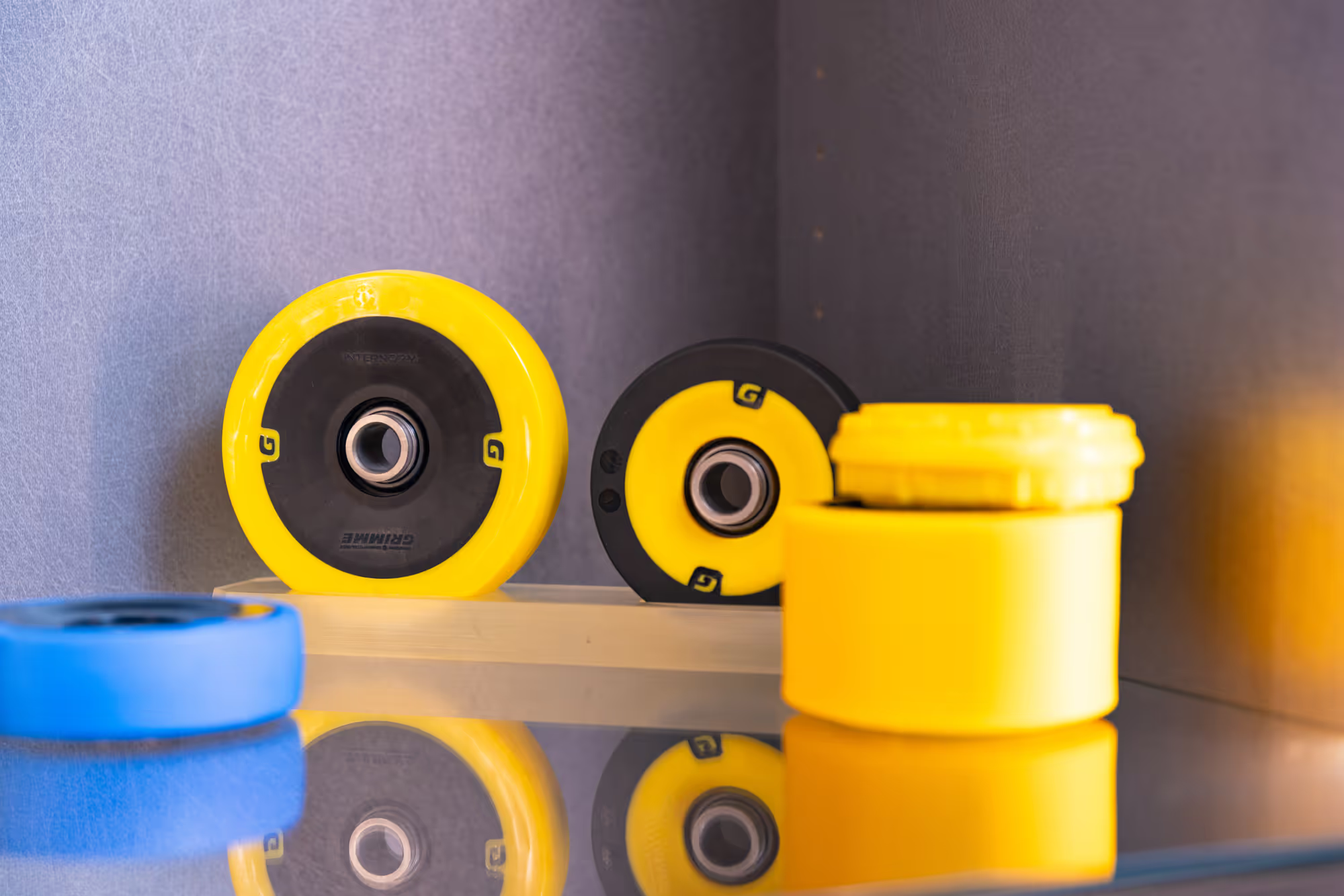
Polyurethan Rollen für vielfältige Anwendungen
Entdecken Sie unsere Polyurethan Rollen für unterschiedliche Einsatzbereiche – von Industrie- und Förderrollen bis zu individuellen Sonderlösungen. INTERNORM entwickelt und fertigt Rollen, die auf Ihre Anwendung und technischen Anforderungen abgestimmt sind.
What are polyurethane rollers?
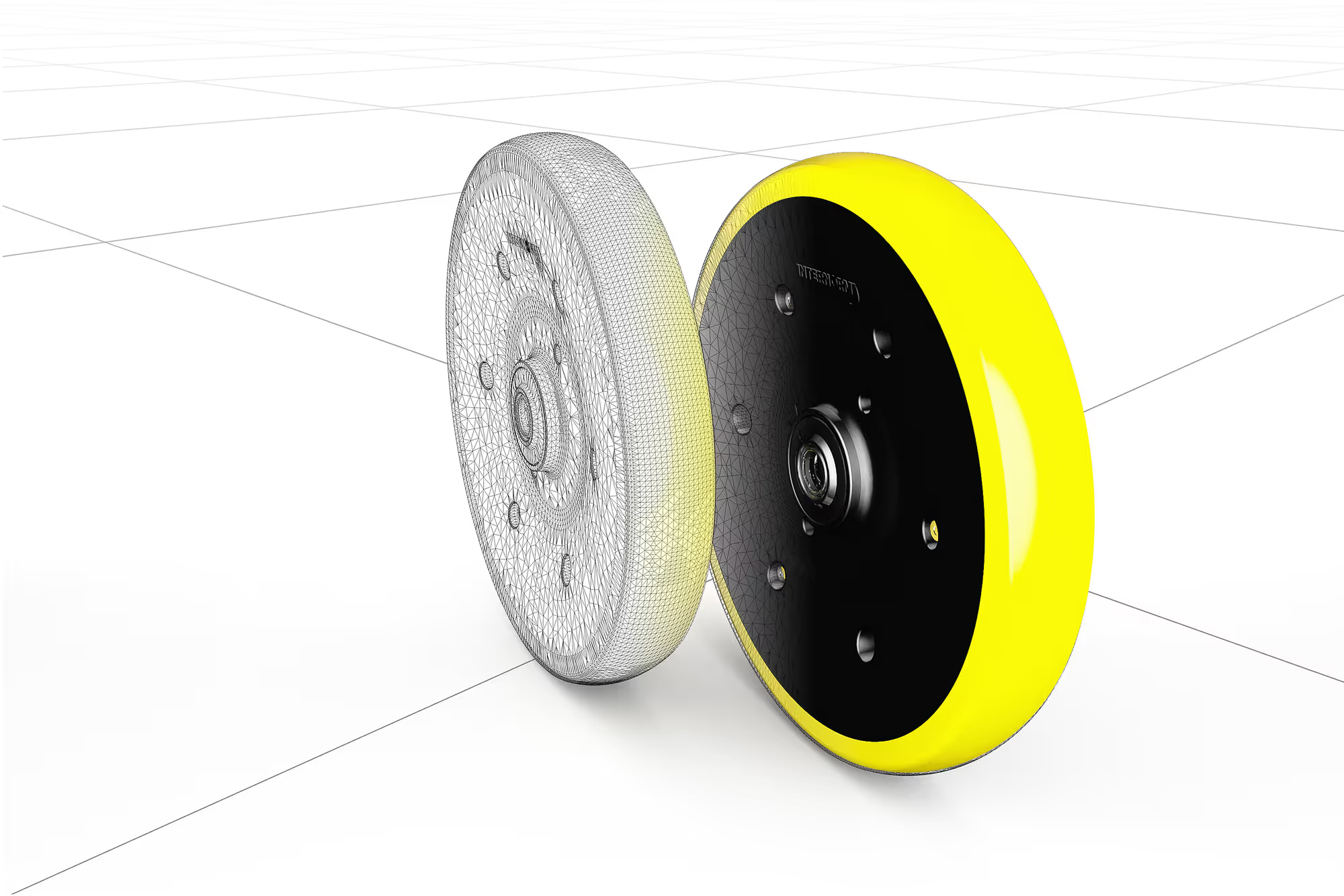
Polyurethane rollers (also PU rollers, PU wheels) are rollers whose tread is made of cast polyurethane. The PU layer is usually applied to a sturdy core or ball bearing made of steel or aluminum. Thanks to their combination of elasticity, load-bearing capacity and wear resistance, these rollers are suitable for numerous industrial and conveying applications.
Polyurethane rollers are manufactured using the casting process. This process offers a decisive advantage: rollers can be produced individually in terms of shape, diameter, load capacity and Shore hardness. This makes it possible to realize solutions that go beyond the possibilities of standardized product catalogs. Even small series can be realized at low mold costs.
Polyurethane is a versatile plastic whose properties can be specifically adapted to different requirements. The material combines the elasticity of rubber with the strength and dimensional stability of hard plastics such as nylon. This makes PU particularly suitable for rollers and wheels in conveyor technology and intralogistics. Depending on the application, polyurethane can be made flexible and soft or particularly hard and resilient.
Technical properties of PU rollers
Polyurethane rollers combine the elasticity of rubber with the high load-bearing capacity of engineering plastics. As a result, they offer an excellent combination of load capacity, wear resistance and floor protection. Compared to rubber rollers, they have lower rolling resistance, while running much more quietly than hard plastic wheels.
The most important advantages of PU wheels include:
- High load capacity even under continuous load
- Low abrasion and long service life
- Quiet running thanks to good damping properties
- Floor-friendly running behavior on sensitive surfaces
- Resistance to many oils, greases and chemicals
- Low rolling resistance for easy movement of loads
- High ride comfort on uneven floors
- Operating temperature range typically from −30 °C to +70 °C
Thanks to their versatile properties, polyurethane rollers are suitable for applications ranging from intralogistics and conveyor technology to demanding heavy-duty solutions.
Shore hardness: The most important metric
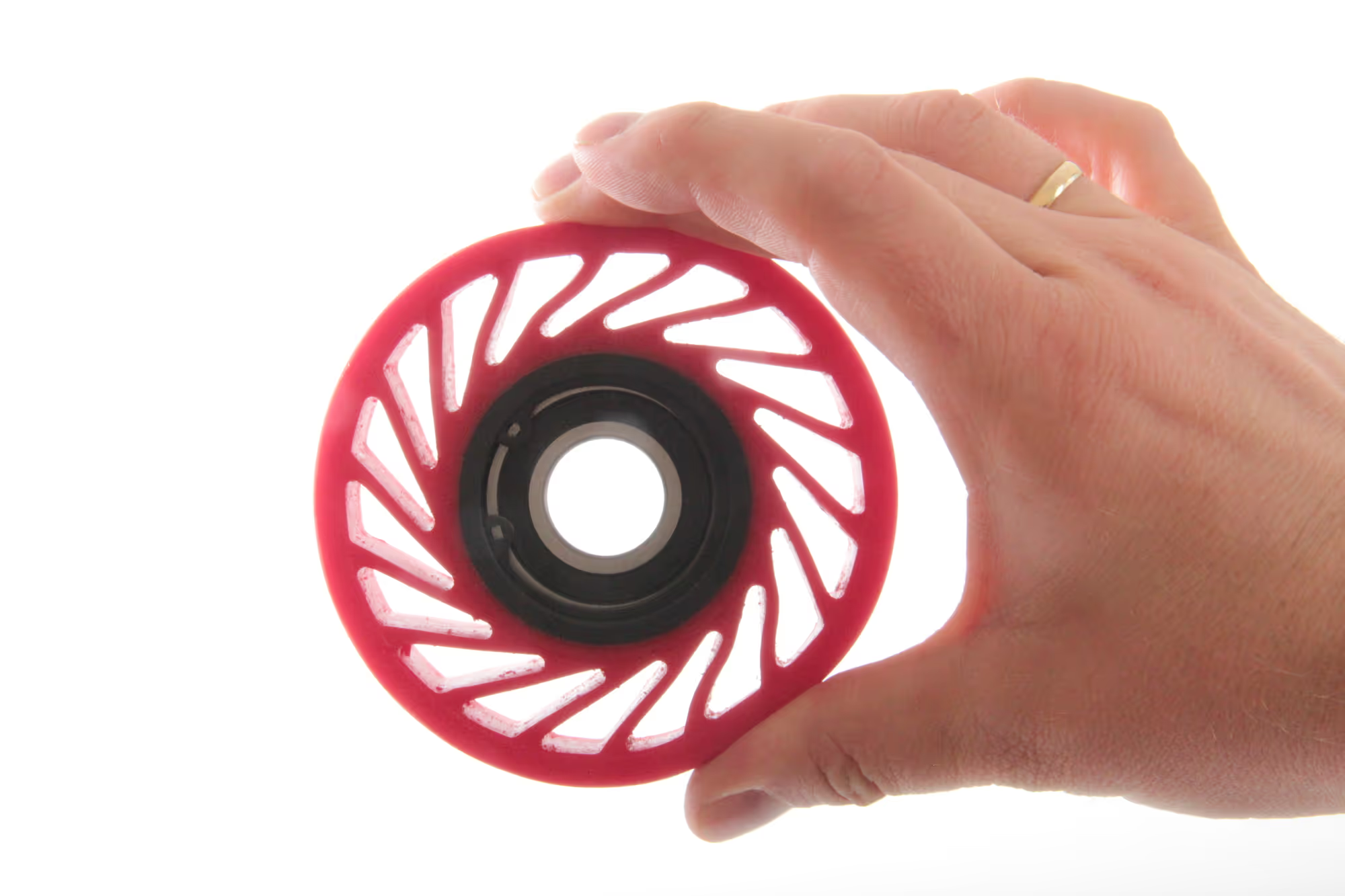
The most important parameter for polyurethane wheels is the Shore hardness. It significantly determines the ratio between cushioning, floor protection, and load capacity. Typical PU wheels range from 60 to 95 Shore A, although INTERNORM can also provide softer materials below 60 Shore A depending on the application.
Below 60 Shore A: Particularly soft and elastic; for applications with high requirements for cushioning, grip, and surface protection.
60–70 Shore A: Soft version with maximum cushioning and high grip; ideal for sensitive surfaces and applications requiring increased comfort.
80–85 Shore A: Medium hardness range and the standard for many logistics applications, as well as polyurethane wheels for pallet trucks. A good balance between load capacity and ride comfort.
90–95 Shore A: Hard version with low rolling resistance and high load capacity for heavy-duty applications and intensive, continuous use.
As a rule of thumb: the softer the wheel, the gentler it is on floors and the better its cushioning. The harder the wheel, the higher its load capacity and efficiency when moving heavy loads.
Comparison: PUR rollers vs. rubber rollers
Anyone looking at the difference between PUR rollers and rubber rollers should above all compare abrasion resistance, load capacity and service life. Polyurethane (PU/PUR) combines the damping properties of rubber with significantly higher mechanical strength. This makes PU/PUR particularly suitable for industrial applications, especially in conveyor technology. Rubber, on the other hand, is mainly used in light transport equipment, suitcases or consumer products.
In a direct comparison, PU offers higher load capacity, better resistance to oils and greases and a significantly longer service life. Rubber and TPR, on the other hand, score with lower purchase costs and good damping properties at light loads.
Which is better – rubber or polyurethane? For continuous industrial applications and high loads, polyurethane is generally the more economical solution. Although the purchase costs are higher, the longer service life and lower wear often lead to lower overall costs (Total Cost of Ownership, TCO). For simple light-load applications, rubber may still be sufficient due to its lower price.
Advantages of polyurethane rollers in industrial use
Low rolling resistance
Loads can be moved with less effort, which relieves operators and reduces energy consumption in automated systems.
High load capacity
Depending on Shore hardness, roller diameter and core design, PU rollers can carry loads from several hundred kilograms up to several tons.
High abrasion resistance
Polyurethane is significantly more wear-resistant than rubber and ensures long service lives even under continuous load.
Floor-friendly running behavior
The elastic tread protects sensitive surfaces such as parquet, coated industrial floors or stainless steel from damage.
Low-noise operation
PU effectively dampens shocks and vibrations, contributing to a quieter working environment.
High ride comfort
Unevenness, joints and thresholds are compensated better than with hard plastic wheels.
Resistance to media
Polyurethane is resistant to many oils, greases and aqueous solutions and is therefore suitable for demanding industrial environments.
Cost-effectiveness
The combination of long service life, low wear and high load-bearing capacity often leads to lower total operating costs.
Areas of application: where PU rollers are used
Polyurethane rollers are used wherever high loads, long service lives and gentle material transport are required. Thanks to their combination of load capacity, wear resistance and damping properties, they have become established in numerous industries.
- Conveyor technology: PU rollers are often used as swivel castors and fixed castors. Roller conveyors, pallet conveyor systems, shuttle cars, pallet trucks and industrial trucks also benefit from the low rolling resistance and high load capacity.
- Mechanical engineering: In production systems, polyurethane rollers serve as transport, pressure or deflection rollers. They ensure precise, low-wear material flow even in continuous operation.
- Construction machinery industry: Rollers and wheels in construction machinery and mobile equipment benefit from high abrasion resistance as well as resistance to dirt, moisture and mechanical loads.
- Energy technology: In systems for wind power, battery production or power distribution, PU rollers are used wherever reliable material movement and long maintenance intervals are required, e.g. in the form of cable guide rollers.
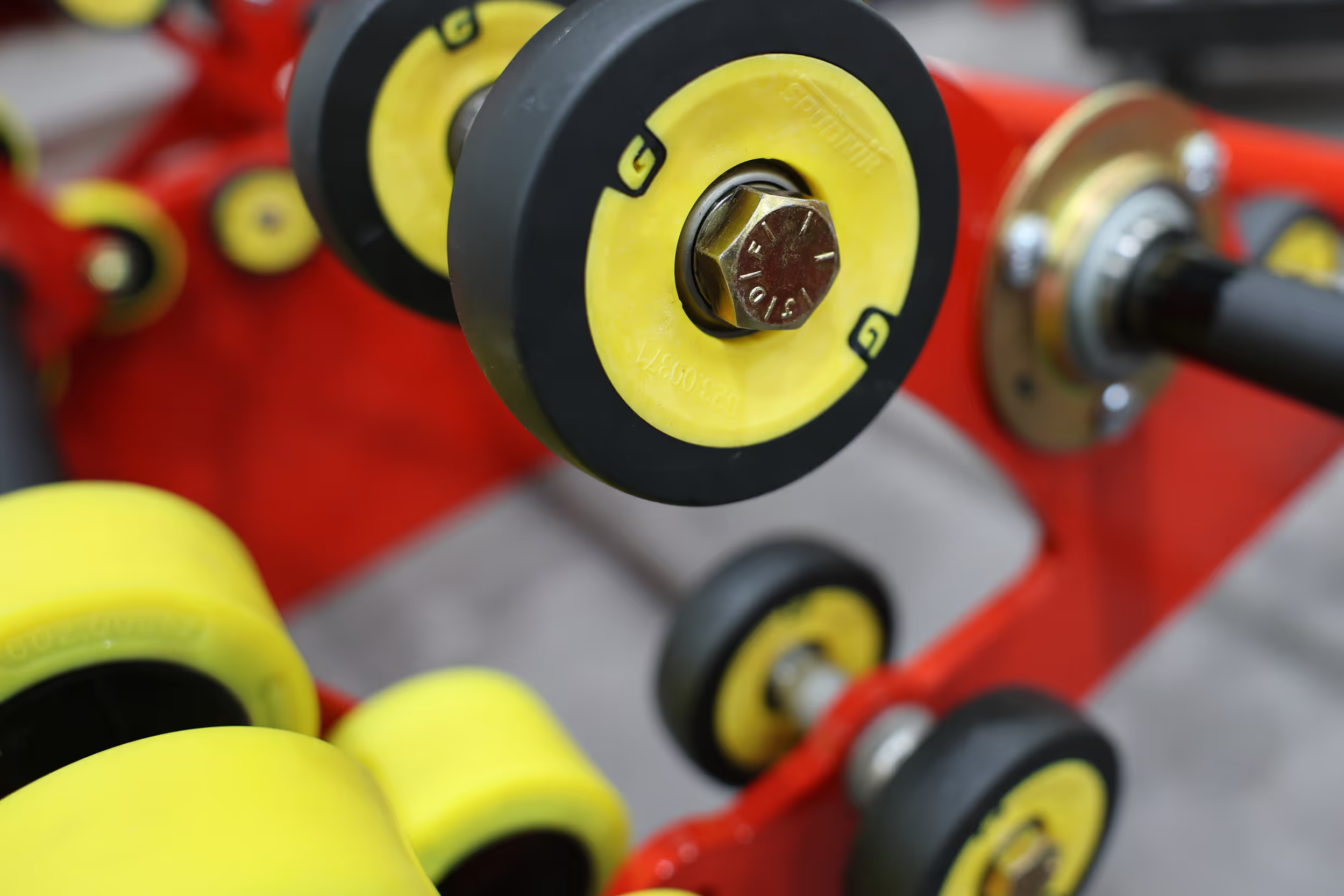
- Agricultural technology: Transport, pressure and guide rollers on field and harvesting machines must withstand dirt, moisture and high impact loads. PU offers a robust and durable solution for this.
Custom PU rollers: individual manufacturing by PU casting
Standard rollers often only partially meet the requirements of industrial applications. Different loads, installation situations or environmental conditions frequently call for an individual solution. This is exactly what INTERNORM Kunststofftechnik specializes in: we develop and manufacture tailor-made PU rollers for customers from mechanical engineering, agricultural technology, conveyor technology, energy technology and other industries.
The great advantage of PU casting is its flexibility. Diameter, roller width, core geometry, Shore hardness and load capacity can be precisely adapted to the requirements of the application. In addition, various core materials as well as PU rollers with ball bearings or plain bearings are possible.
The process offers decisive advantages, especially for new developments. As tooling costs in PU casting are comparatively low, prototypes, one-offs and small series can be produced economically. Customers do not necessarily need a finished drawing. Often an idea, a sample part or a description of the application is enough to jointly develop the right solution.
Another advantage: if demand later grows from small series to series production, INTERNORM can switch production to the injection molding process. The customer continues to be looked after by the same contact person and benefits from a continuous development and manufacturing process – without changing suppliers.
Your advantages with INTERNORM
- Support right from the development and design phase
- Individual diameters, widths and geometries
- Shore hardnesses from 60 to 95 Shore A
- Steel or aluminum cores
- Optionally with ball bearings or plain bearings
- Cost-effective production of prototypes and small series
- Scalable production up to series production
- One development partner throughout the entire product life cycle
“Our customers often come to us with a specific challenge rather than a finished design. Together we develop the right PU roller – from design and material selection to the ready-to-use component.” – Product Manager Casting – Lukas Többen
“Small parts with a big impact. Thanks to very close and partnership-based development work with INTERNORM, we were able to extend the life of our rollers thanks to a more stable rim. The improved concept and new branding gave us an important unique selling point.”


Conclusion — Polyurethane rollers at a glance
Polyurethane rollers are the ideal choice for industrial applications in which abrasion resistance, load capacity and floor protection are required in equal measure. Thanks to their combination of elastic running behavior and high mechanical strength, they are used in conveyor technology, mechanical engineering, agricultural technology and numerous other industries.
Compared to rubber rollers, PU rollers offer a longer service life, less wear and greater resistance to oils, greases and many other media. The most important influencing factor is Shore hardness: it determines whether a roller is designed to be soft and damping or particularly hard and load-bearing.
When standard solutions reach their limits, INTERNORM Kunststofftechnik offers the possibility of economically realizing individual roller solutions with PU casting even in small quantities – from development and prototypes to series production.
Looking for a tailor-made PU roller for your application? INTERNORM supports you from design to production.
FAQ — Frequently asked questions about polyurethane rollers
Here you will find direct answers to frequently asked questions about our products.
What are polyurethane rollers?

Polyurethane rollers are running and transport rollers with a tread made of polyurethane (PU/PUR), an elastic plastic with high abrasion resistance. They typically consist of a metal core with a PU coating and are used in mechanical engineering, conveyor technology and logistics.
Which is better — rubber or polyurethane?
In industrial applications, polyurethane is superior to rubber in almost all mechanical properties: better abrasion resistance, higher load capacity, good damping properties and greater resistance to oils and greases.
What is the difference between rubber and PU rollers?
Rubber is an inexpensive material for light-load applications such as suitcase wheels or scooters. PU rollers are designed for industrial use: higher load capacity, significantly better abrasion resistance and resistance to oils. Rubber is manufactured by injection molding, PU is cast and can economically cover special dimensions even in small series.
Can PU rollers be made to measure?
Yes. Using the PU casting process, PU rollers can be produced in individual dimensions, Shore hardnesses and with different cores (steel, aluminum) from small series upwards. Mold costs for casting are low, so even small quantities can be manufactured economically. This is particularly interesting for OEMs and machine builders who cannot use standard dimensions from the catalog.