

Precision in series production
with injection molding
Injection molding is our core technology for the efficient mass production of plastic parts starting at 1,000 units. We produce sophisticated components for you with consistently high quality—precise, cost-effective, and reliable from the first unit to the last.
Injection Molding: Processes, Materials, and Industrial Applications
Injection molding is an industrial manufacturing process in which plastic granules are plasticized and injected under high pressure into a mold, also known as a cavity. Once cooled, the result is a dimensionally stable component with precise measurements. This process is ideal for the cost-effective mass production of plastic parts with complex geometries, tight tolerances, and reproducible material properties—ranging from small batches to large-scale production.
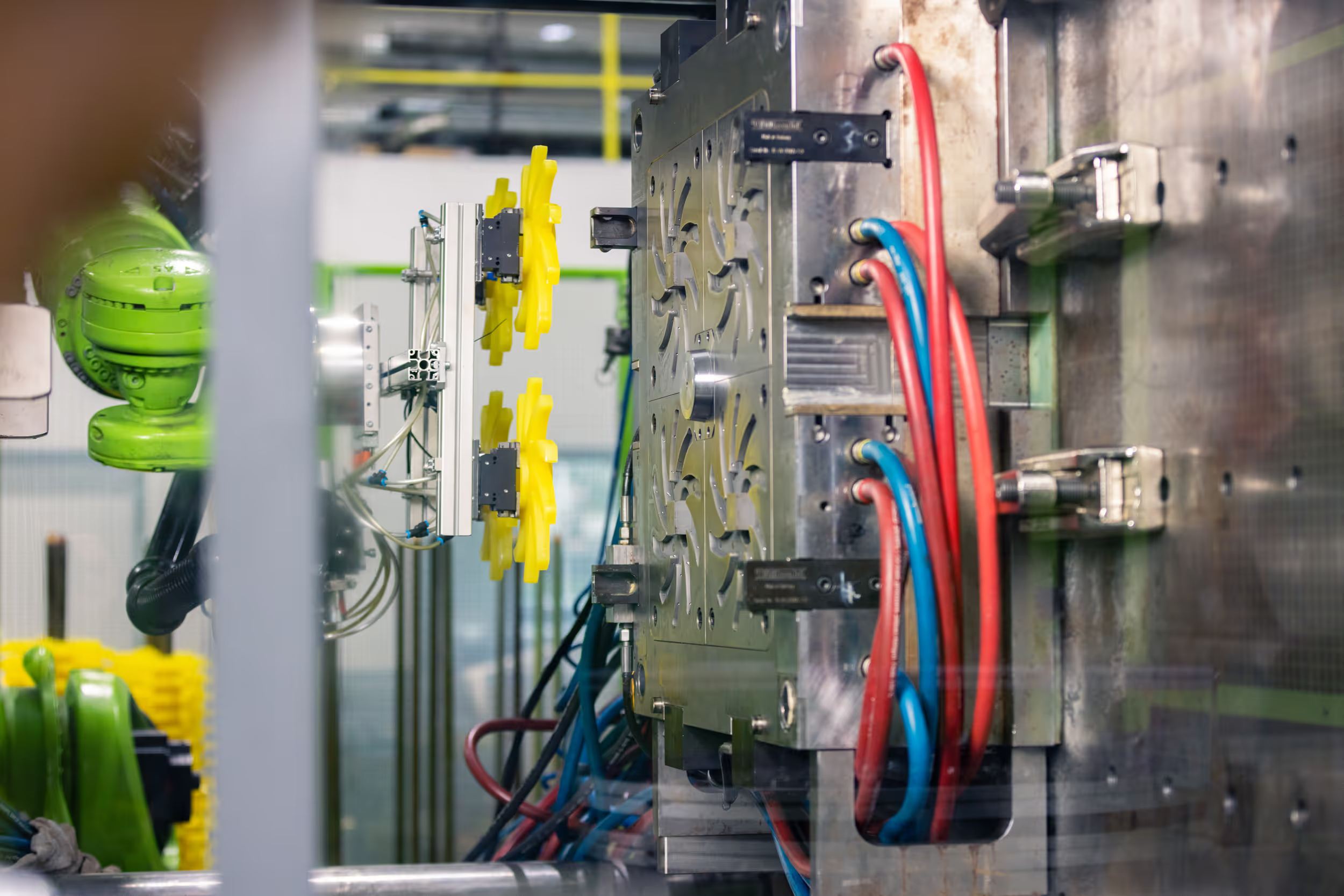
Precision Injection Molding Solutions
We realize custom plastic injection-molded parts – from tool development to series production. Ideal for demanding applications requiring consistently high quality.
Multi-Component Injection Molding
We enable the precise bonding of different materials such as plastic, elastomer, and metal in a single, automated manufacturing process. This results in complex components with strong hard-soft connections or integrated seals, eliminating the need for additional assembly.
Heated Tool Welding
Thermal joining of plastic parts through melting and pressing creates a minimally visible yet high-strength weld seam. This process is applicable to all thermoplastics, including TPU, and enables the production of complex hollow plastic bodies.
Rubber Processing (Vulcanization)
In injection molding with vulcanization, raw rubber is cross-linked directly in the mold under heat and pressure. This creates elastic, dimensionally stable components with high dimensional accuracy. The process is ideally suited for automation and perfect for the mass production of sealing and damping components.
Product Variety
Our expertise covers the production of injection-molded components in various sizes, shapes, and material variants. Using state-of-the-art technology, we manufacture precise, durable, and glass-fiber-reinforced plastic parts that meet the highest quality standards and are characterized by high strength, stability, and low weight.
Our machinery:
Technology for the highest demands
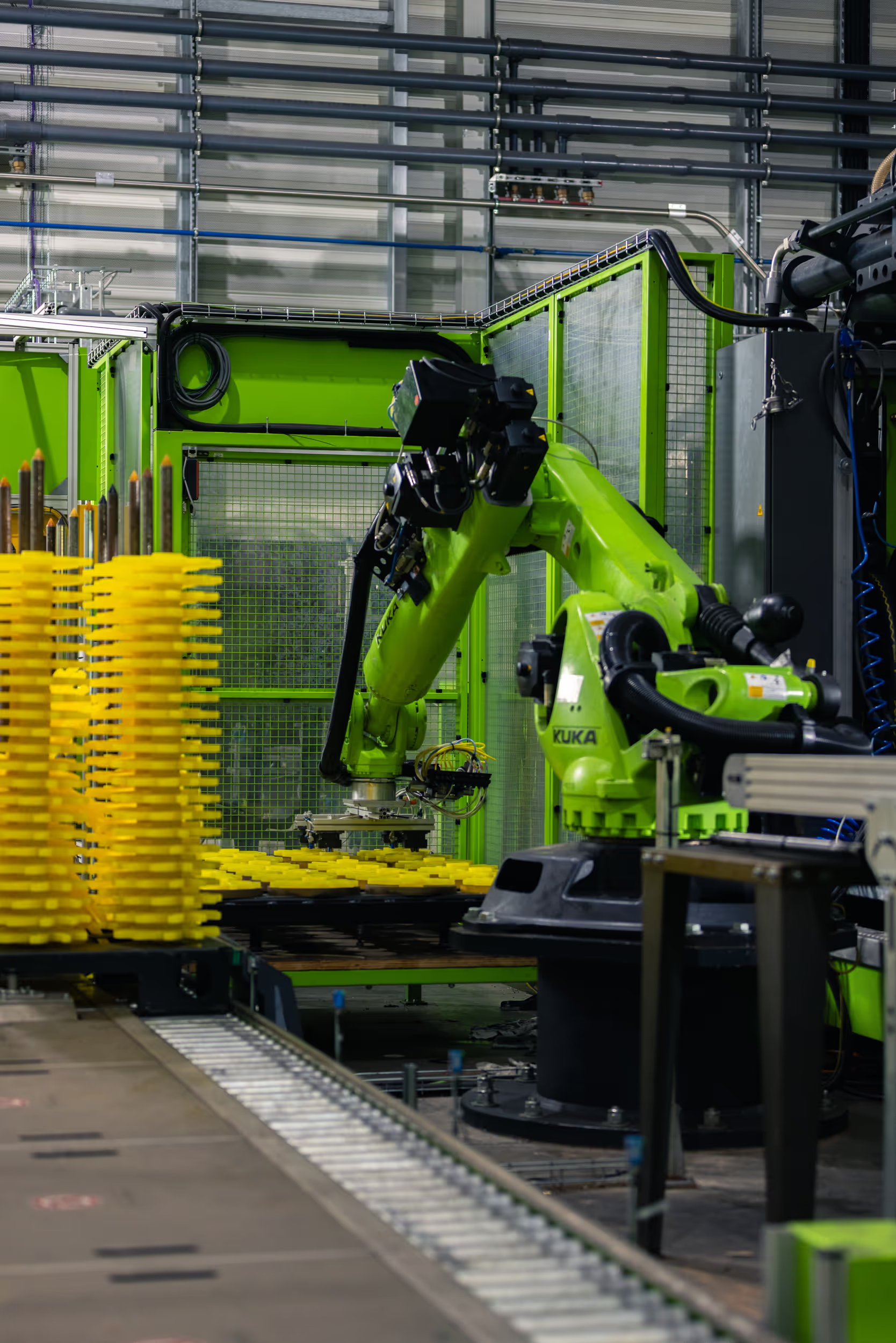
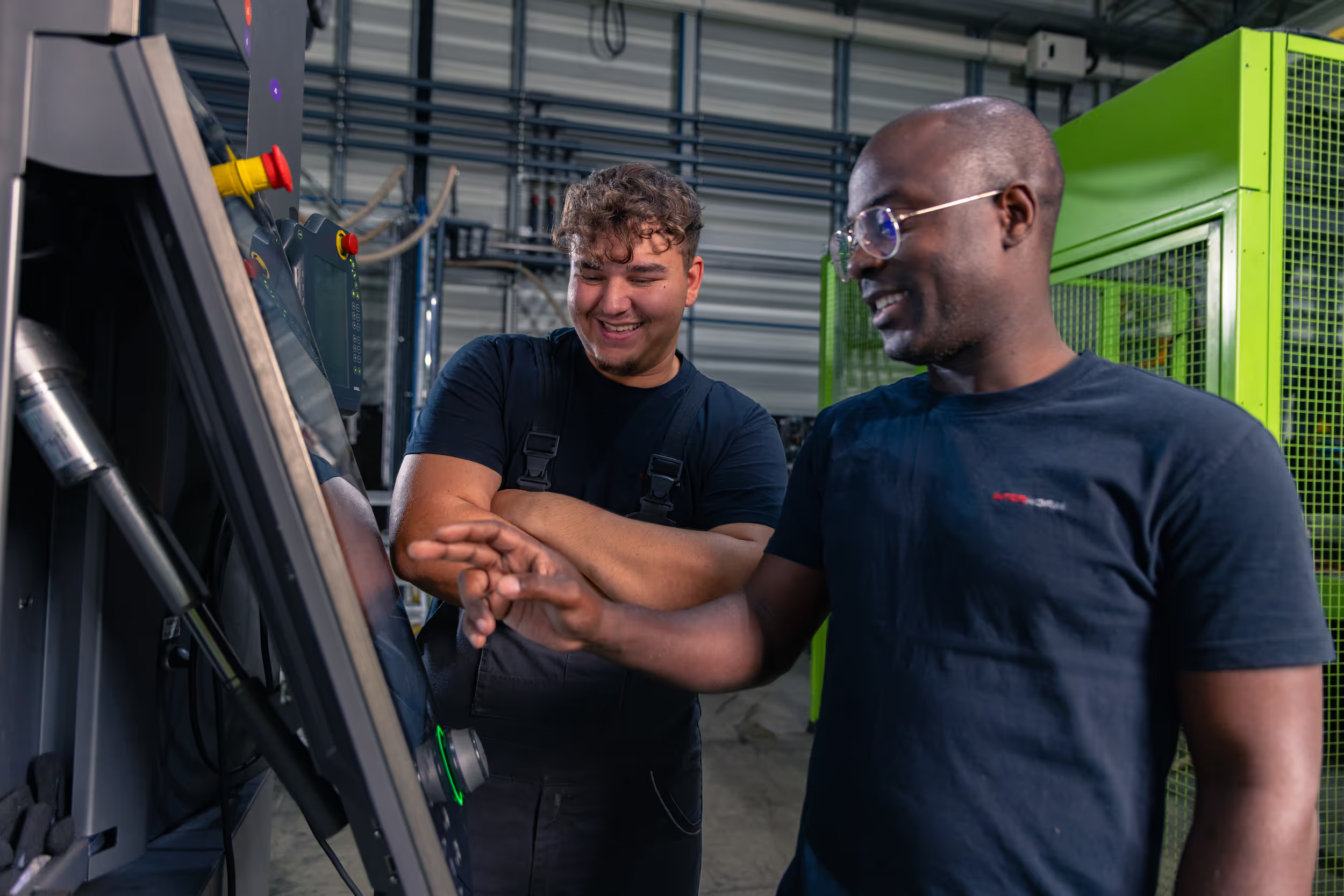
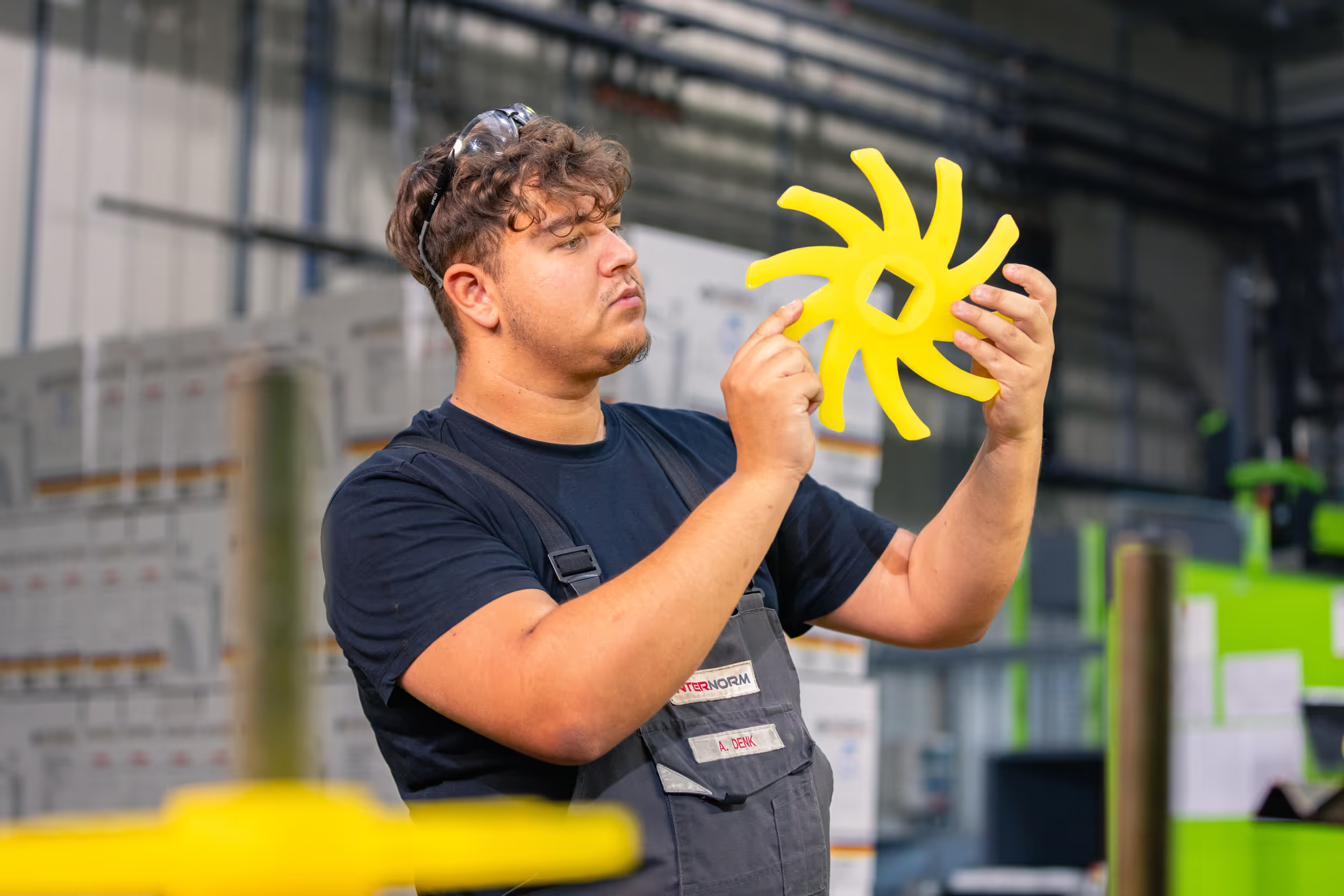
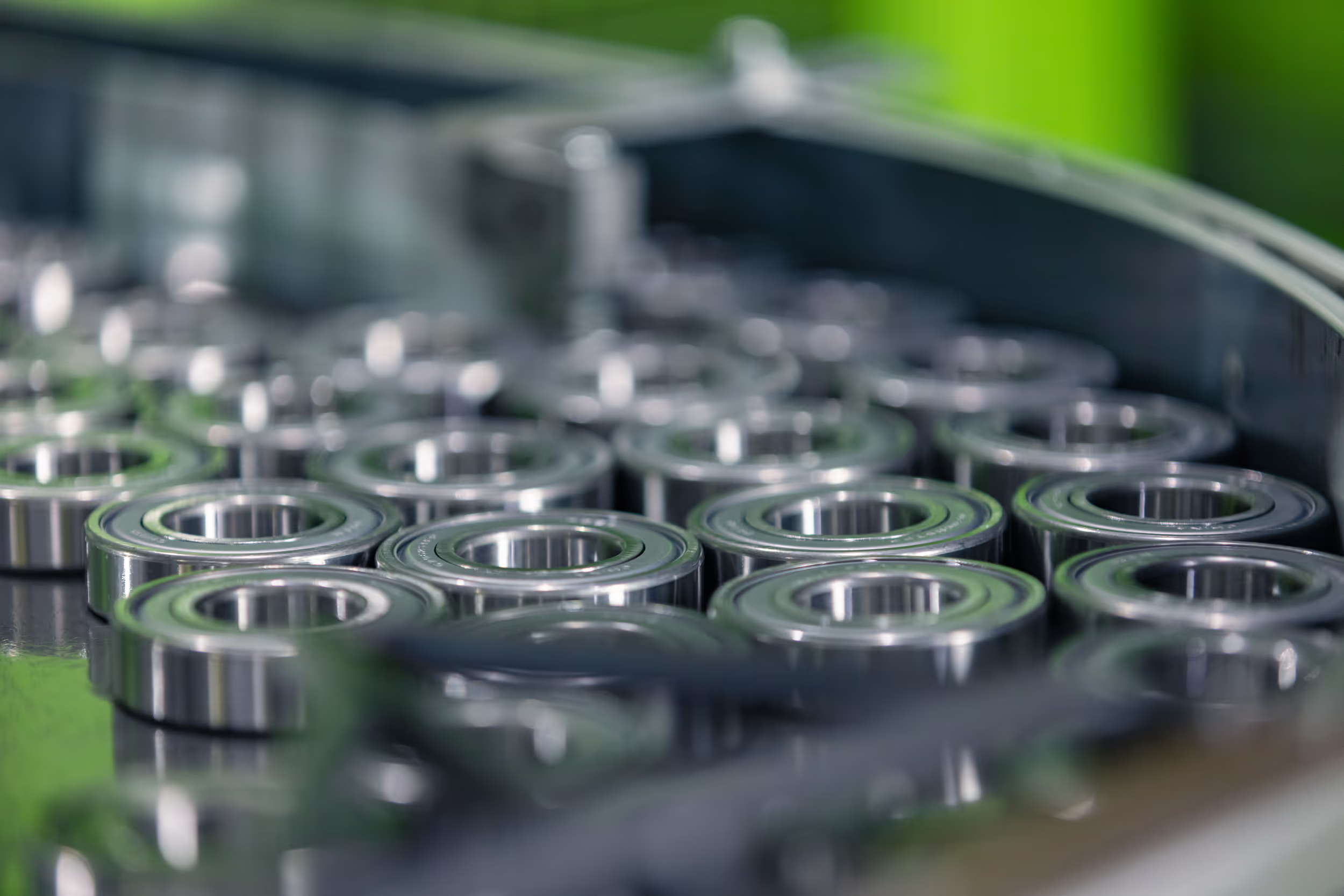
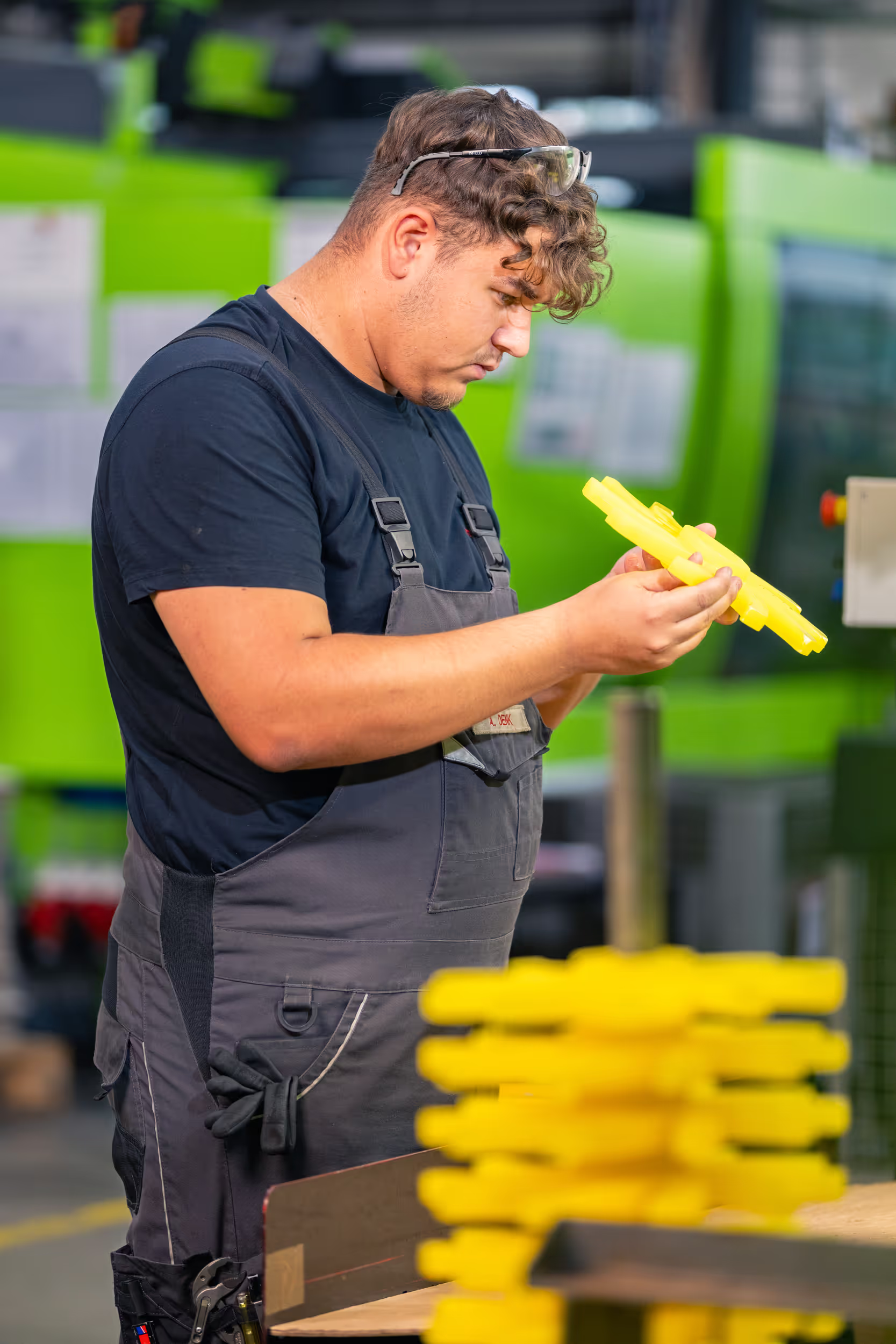
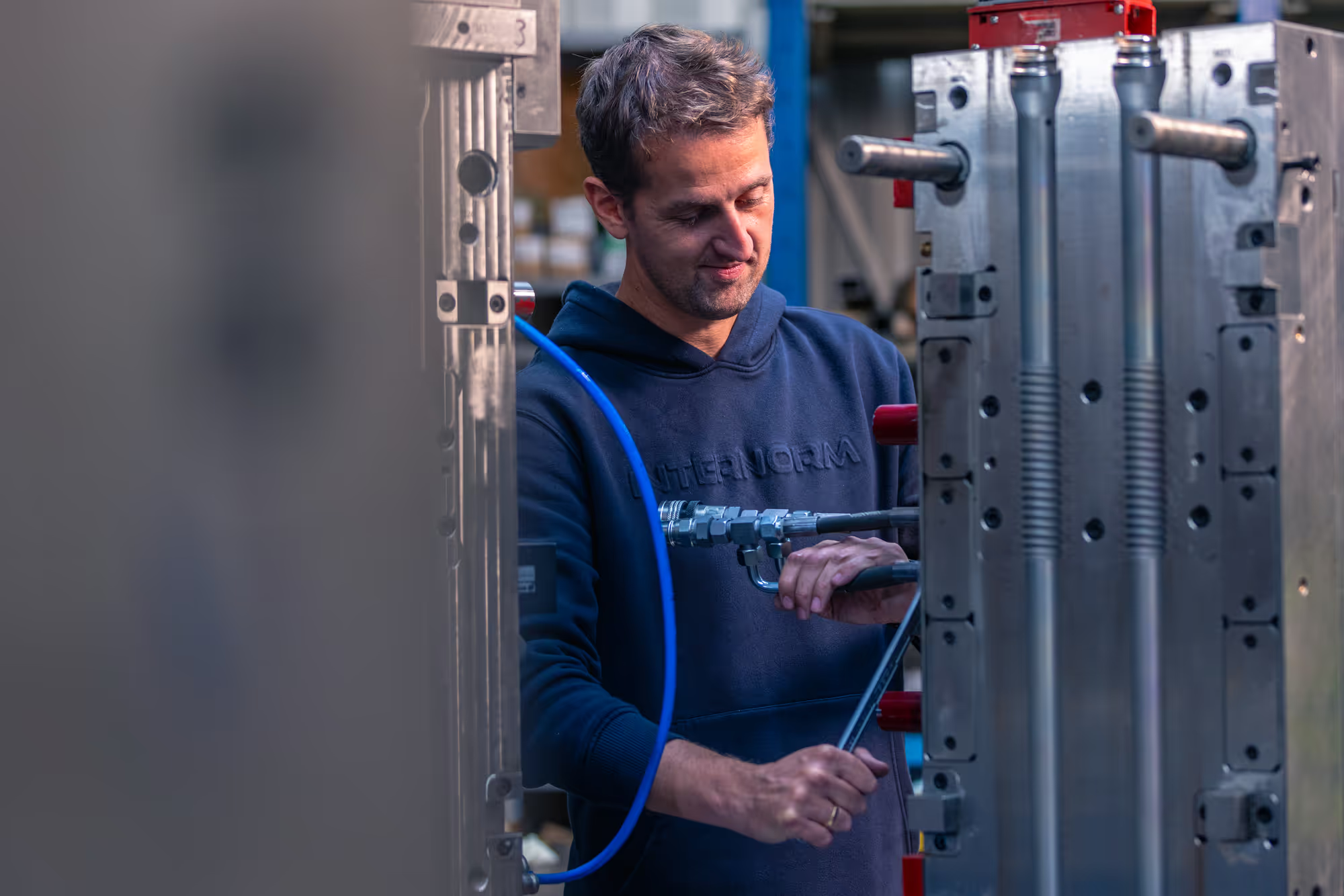
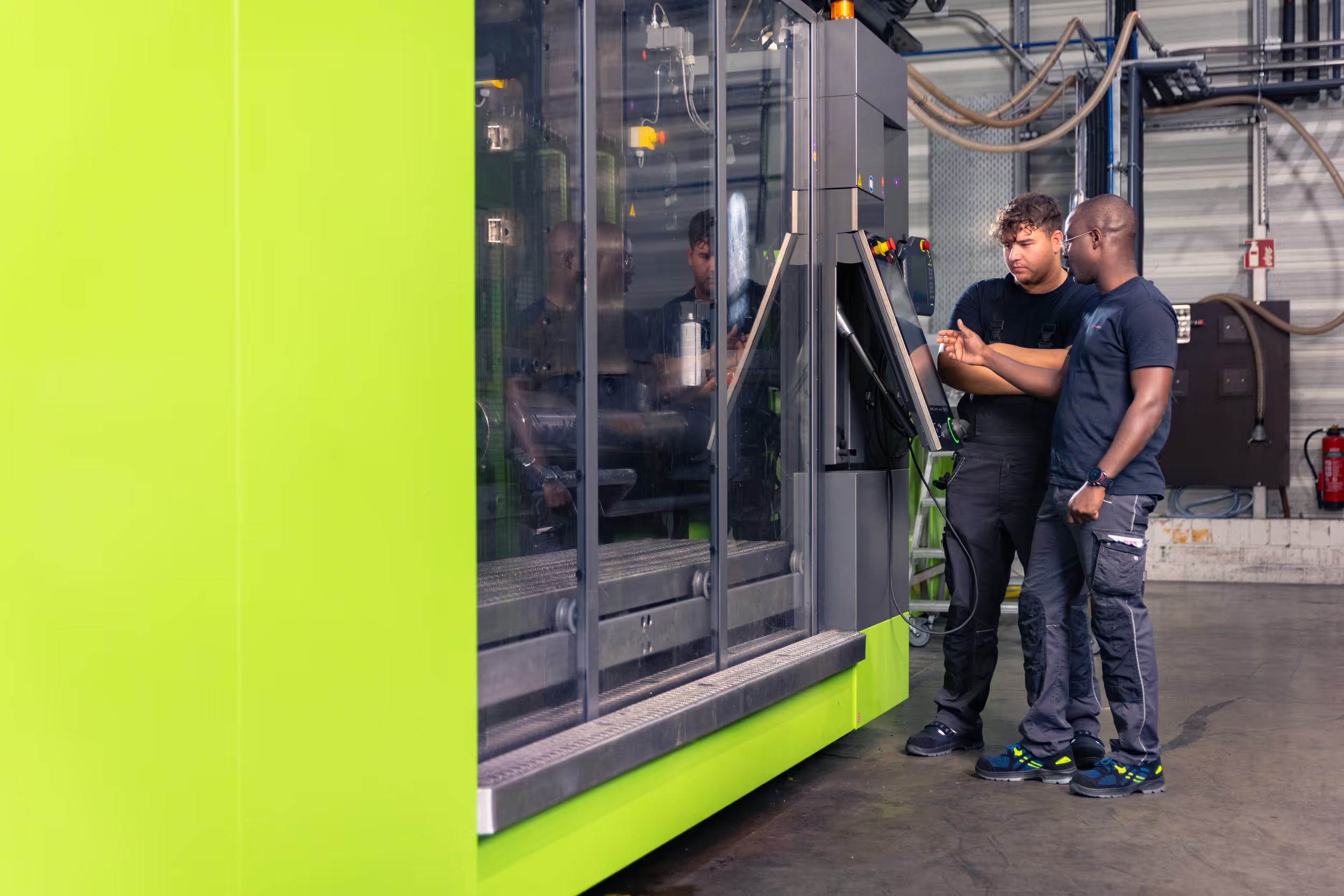
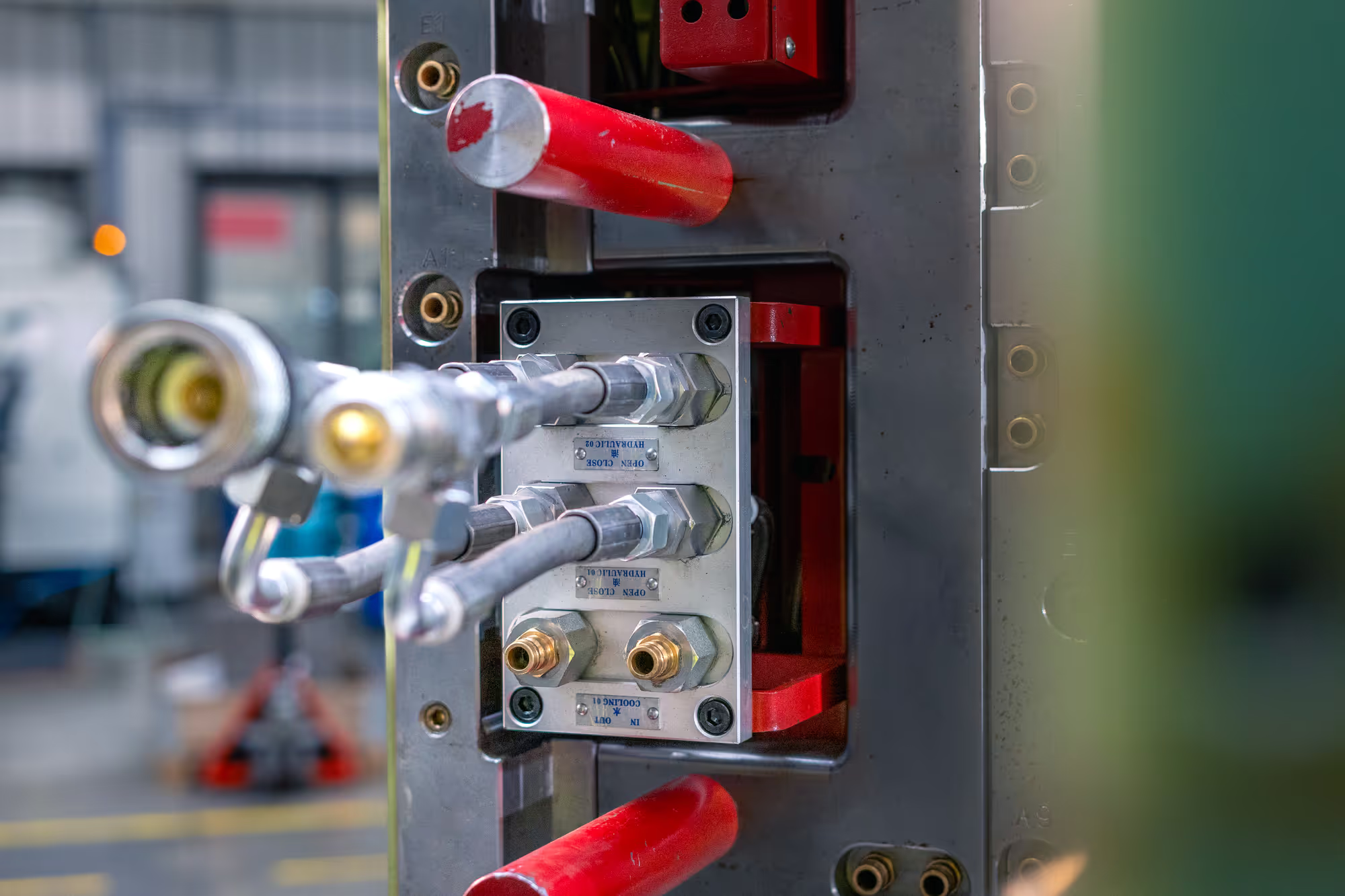
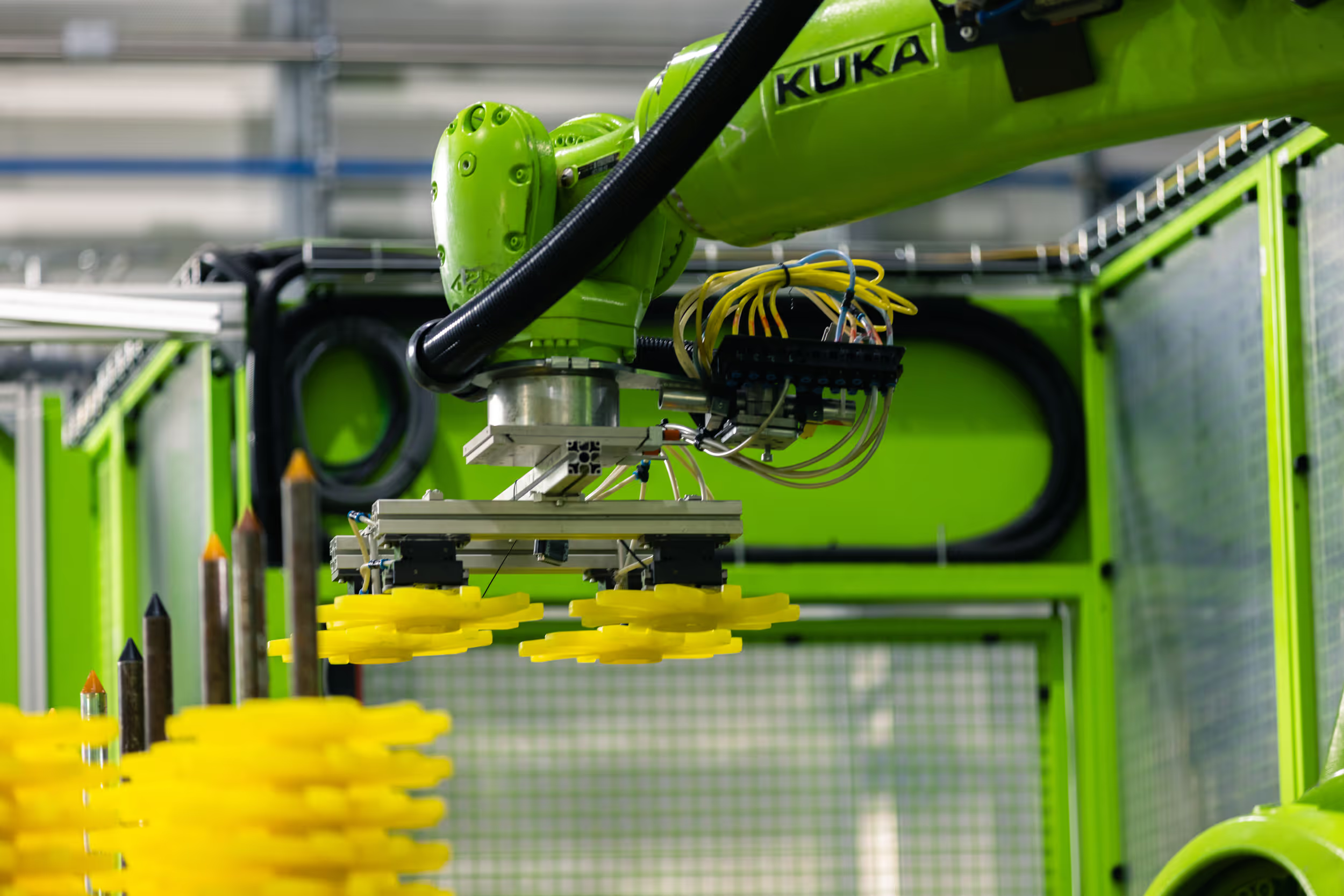
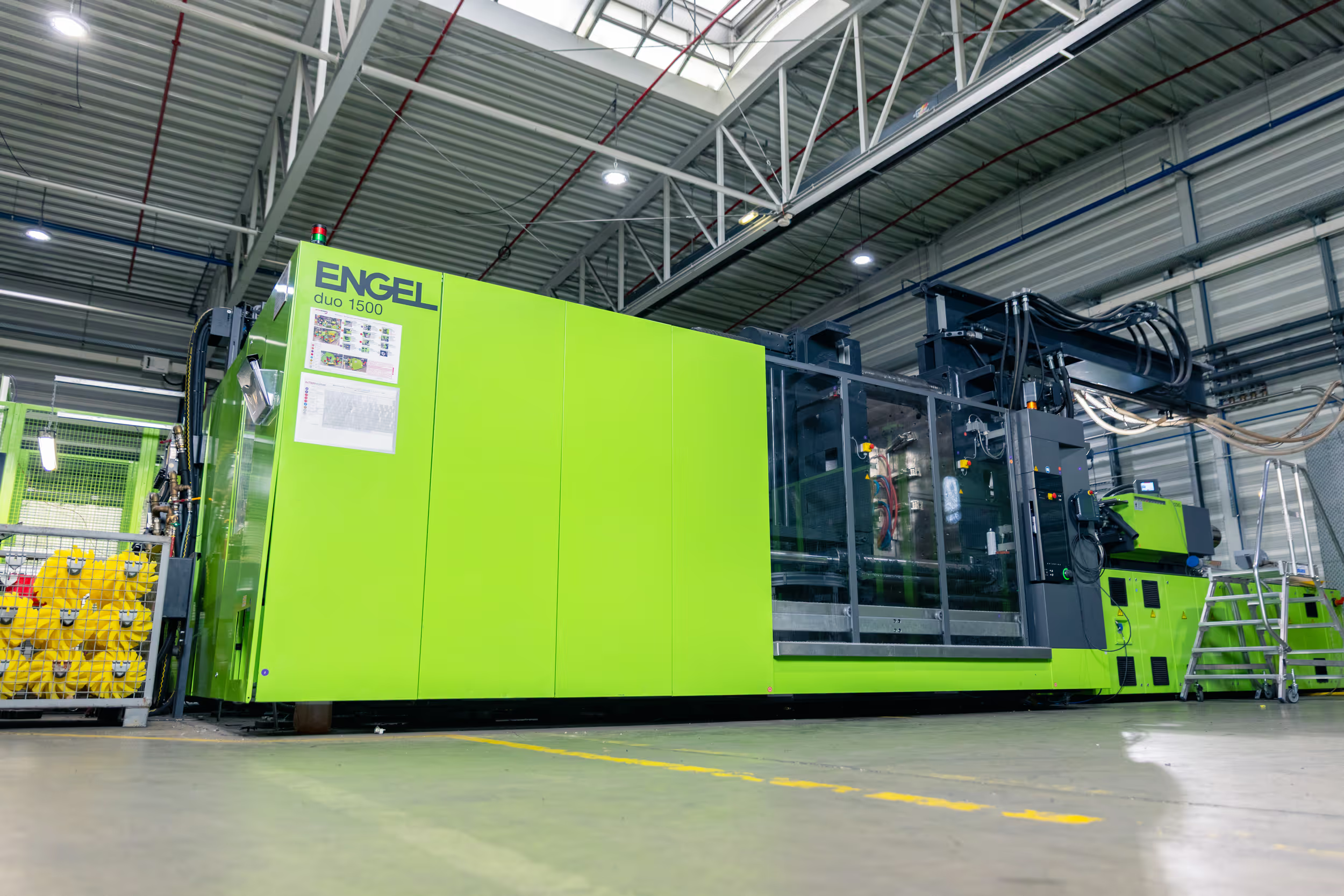
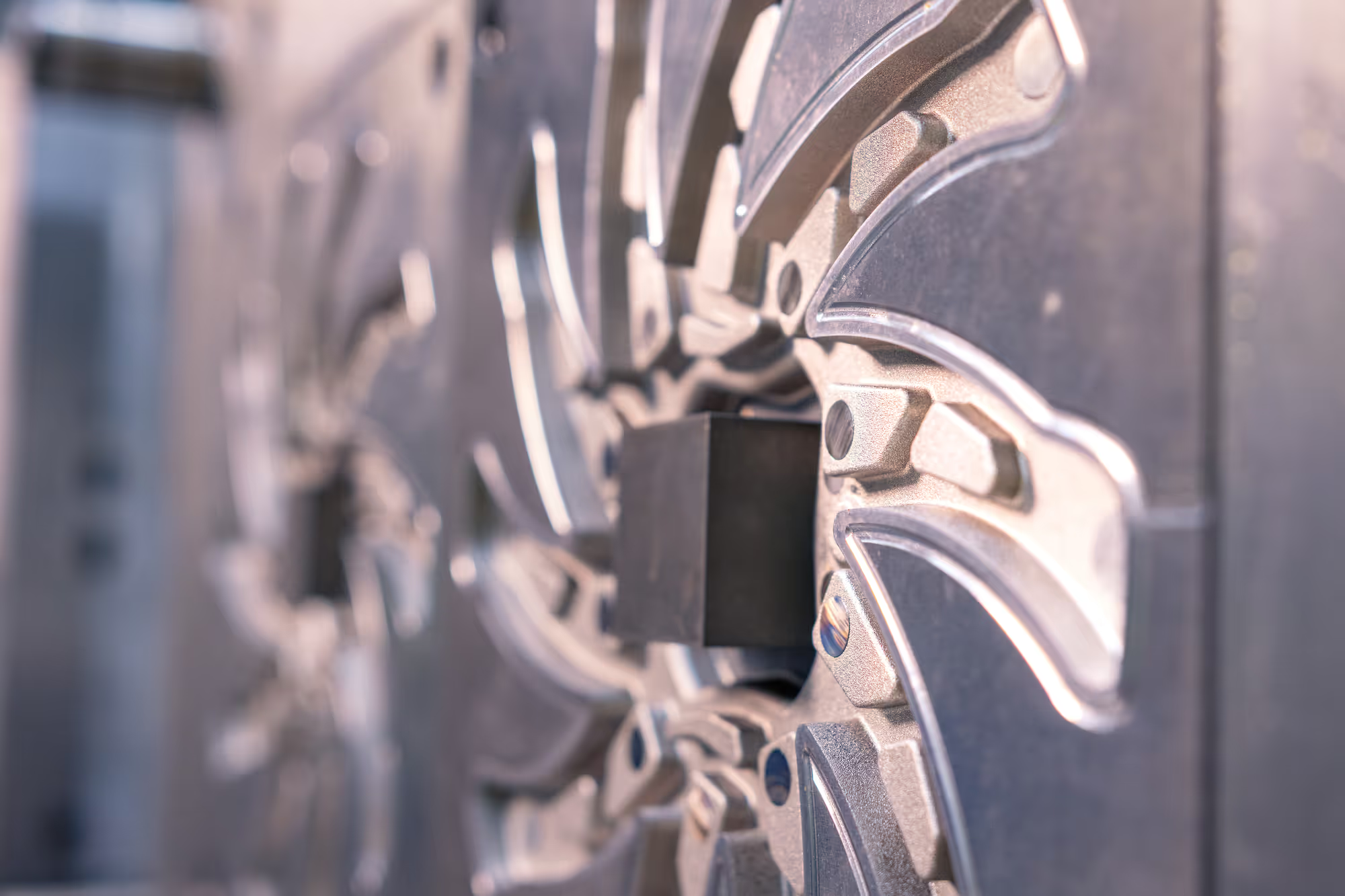
The modern machinery is at the heart of our production. With high-performance injection moulding systems and precise process technology, we ensure that every component is produced exactly according to your specifications and at the same time economically. As a result, we are ideally equipped to reliably meet even complex requirements.
Our performance in figures
Every component is backed by precise technology and many years of experience. Our key figures provide a clear overview of the dimensions in which we work for you — from machine thickness to the variety of materials.
maximum closing force
injection moulding machines
materials in use
material weight
Injection Moulding Applications
Here you can discover selected references from our Injection molding production and see for yourself the variety and quality of our completed projects.
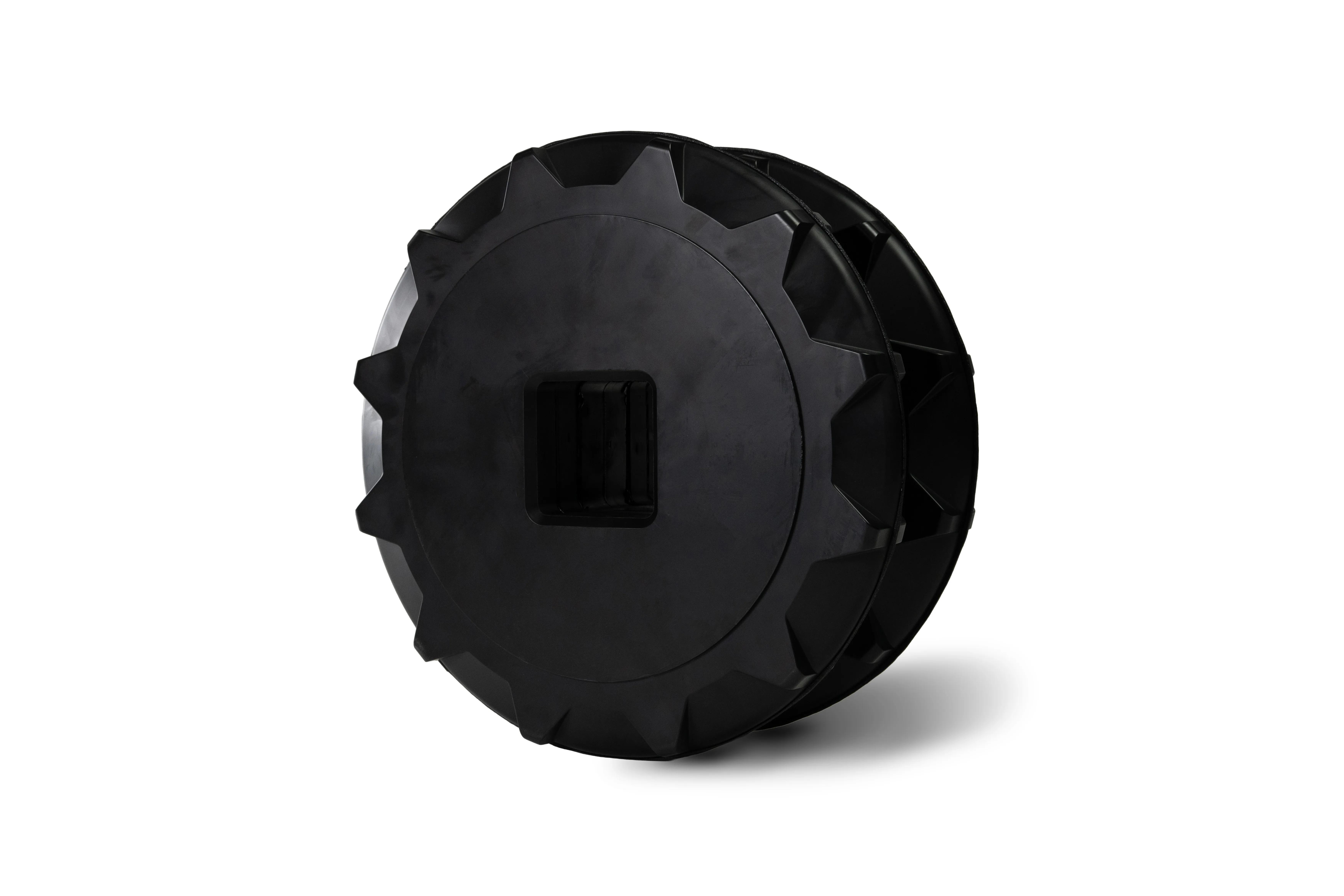
Packer wheel
Wheel for strengthening the soil: Over 40% weight reduction compared to the previous steel component. As a result, lower axle load and improved performance in the field.
Spritzguss
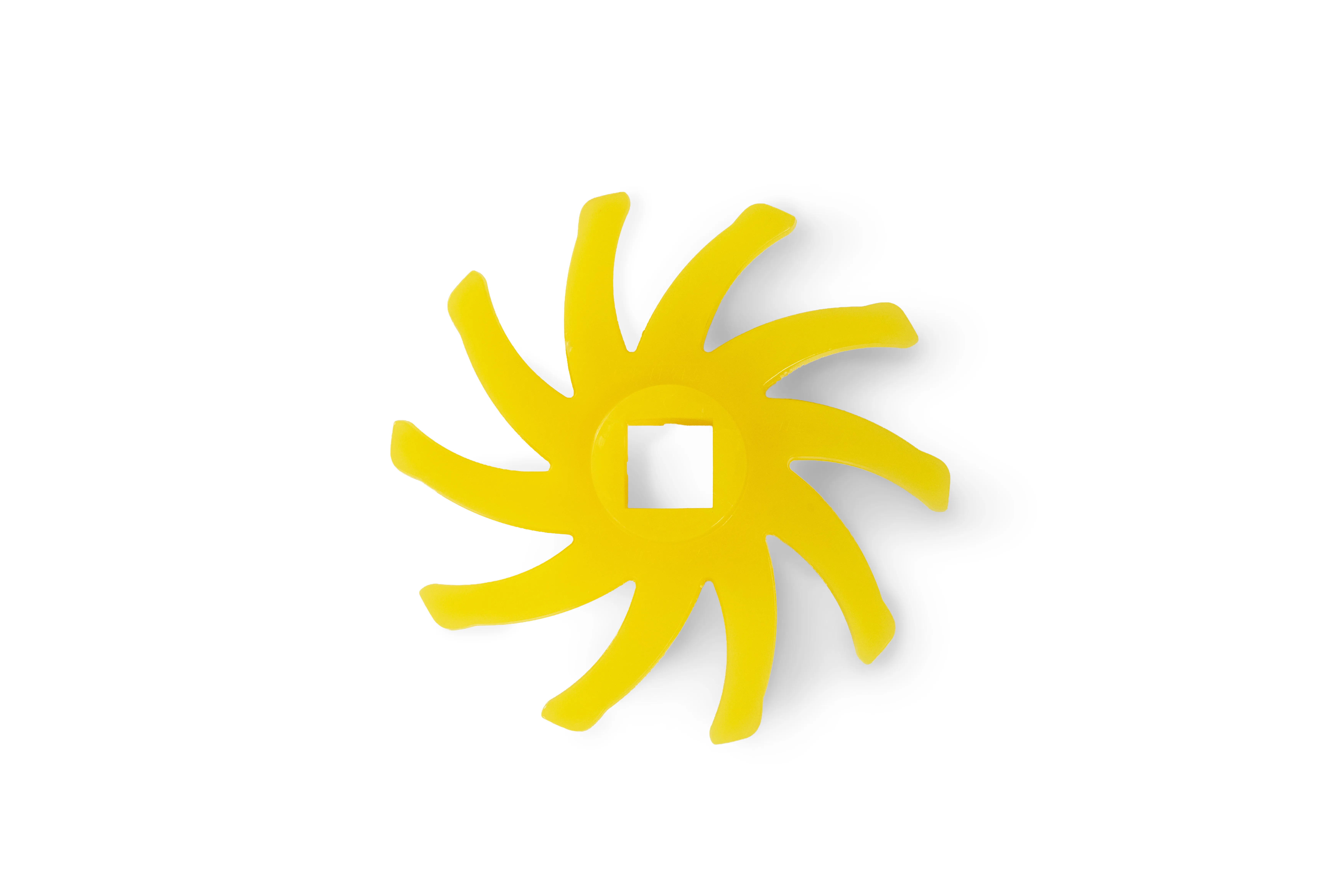
Sorting star / Sieve star
Sieve stars are characterized by their high flexibility and wear resistance, particularly in extreme situations in the field on rocky soils.
Spritzguss
Gießen
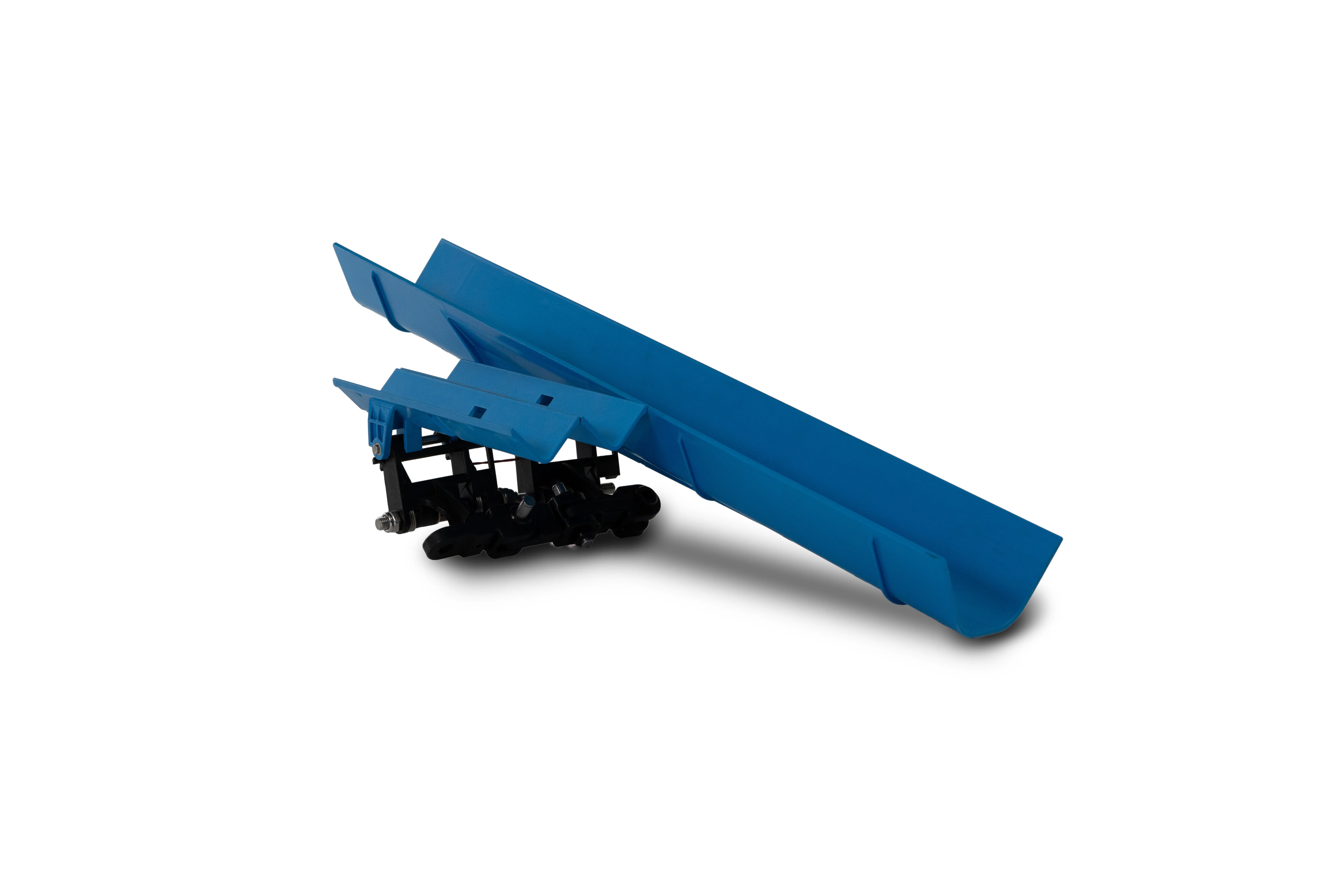
Asparagus peel
Mineral-filled polyamide is characterized by its high mechanical strength and is also food grade.
Spritzguss
Baugruppen
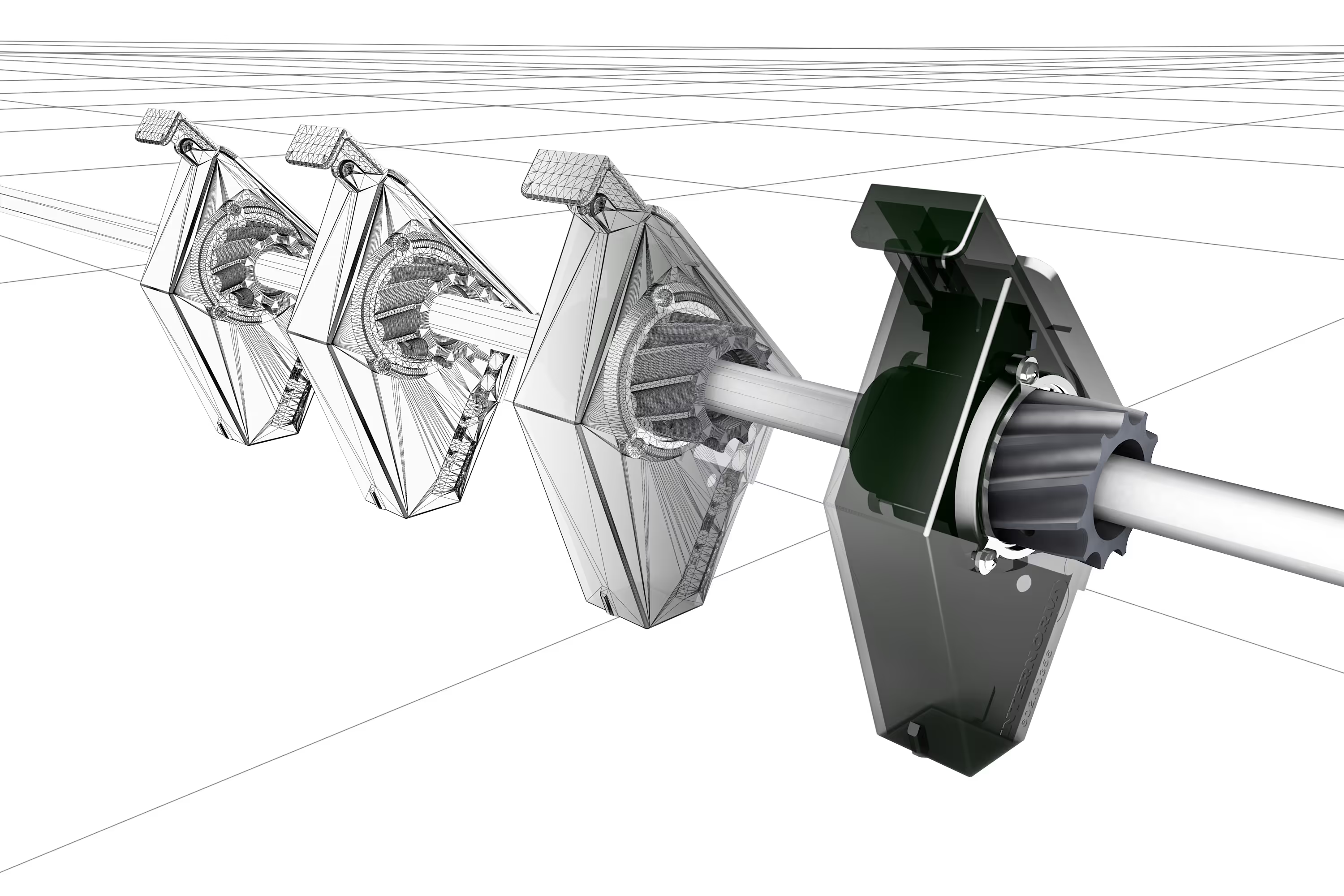
Saw housing
Complex plastic saw housing: weight savings compared to steel, easy installation, maintenance and replacement thanks to optimised functionality.
Spritzguss
Baugruppen
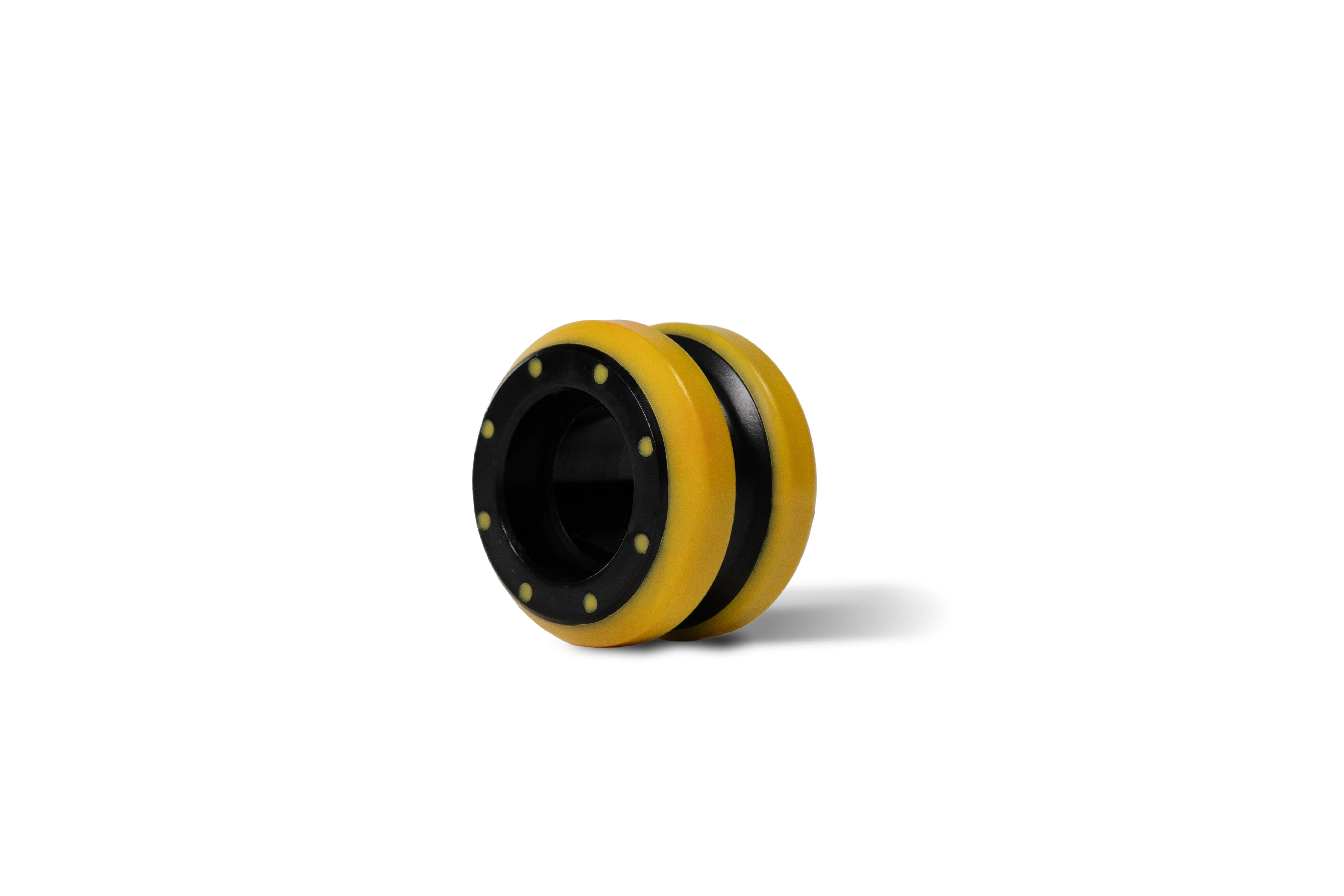
Two-component roller
Two-component roller: Abrasion-resistant and impact-resistant for use in conveyor systems.
Spritzguss
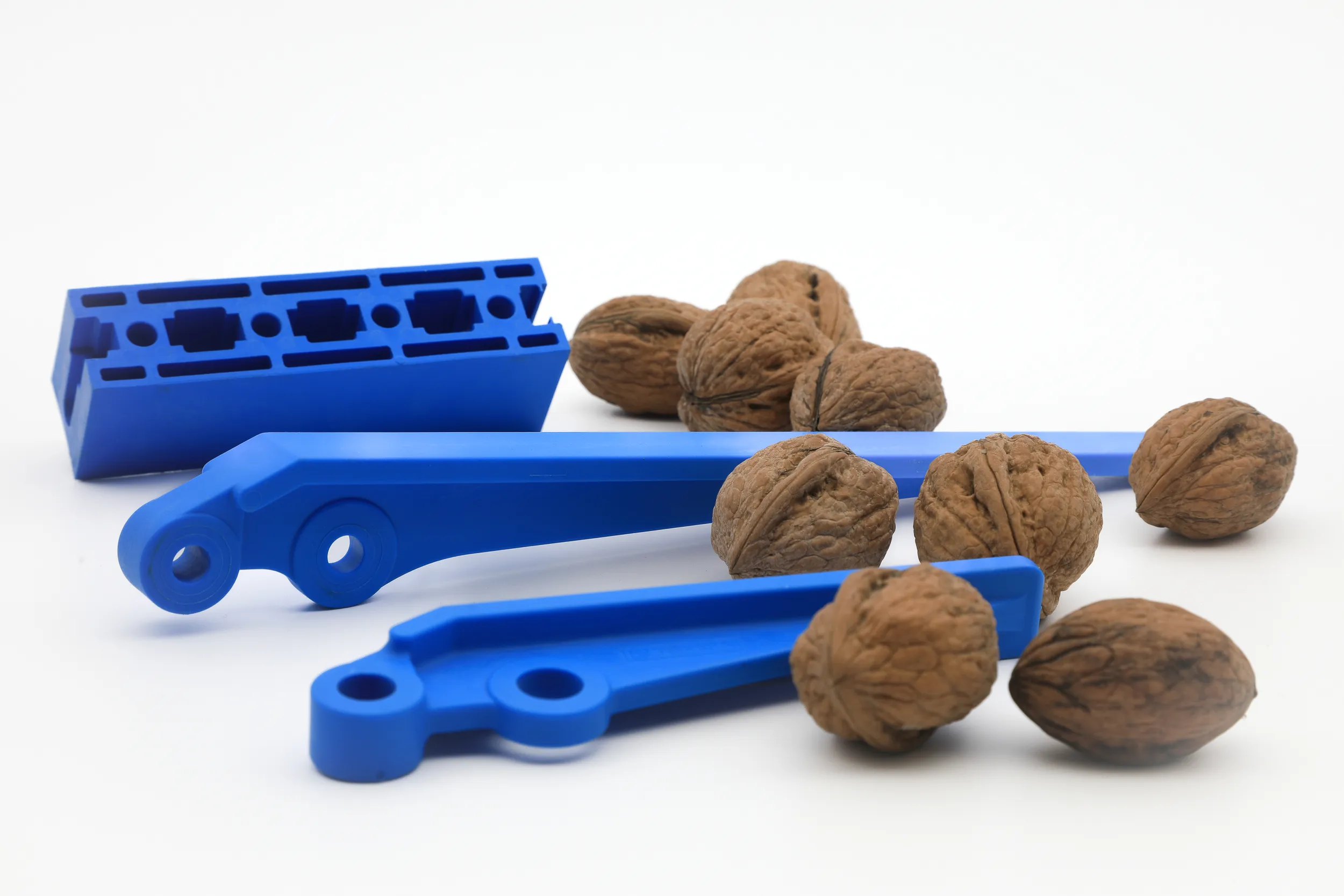
Sorting fingers
Sorting fingers are characterized by their excellent dynamic load capacity and food compliance.
Spritzguss
More options for your production
Not every project uses injection moulding. For prototypes, small series or the assembly of complete systems, we offer you alternative processes.
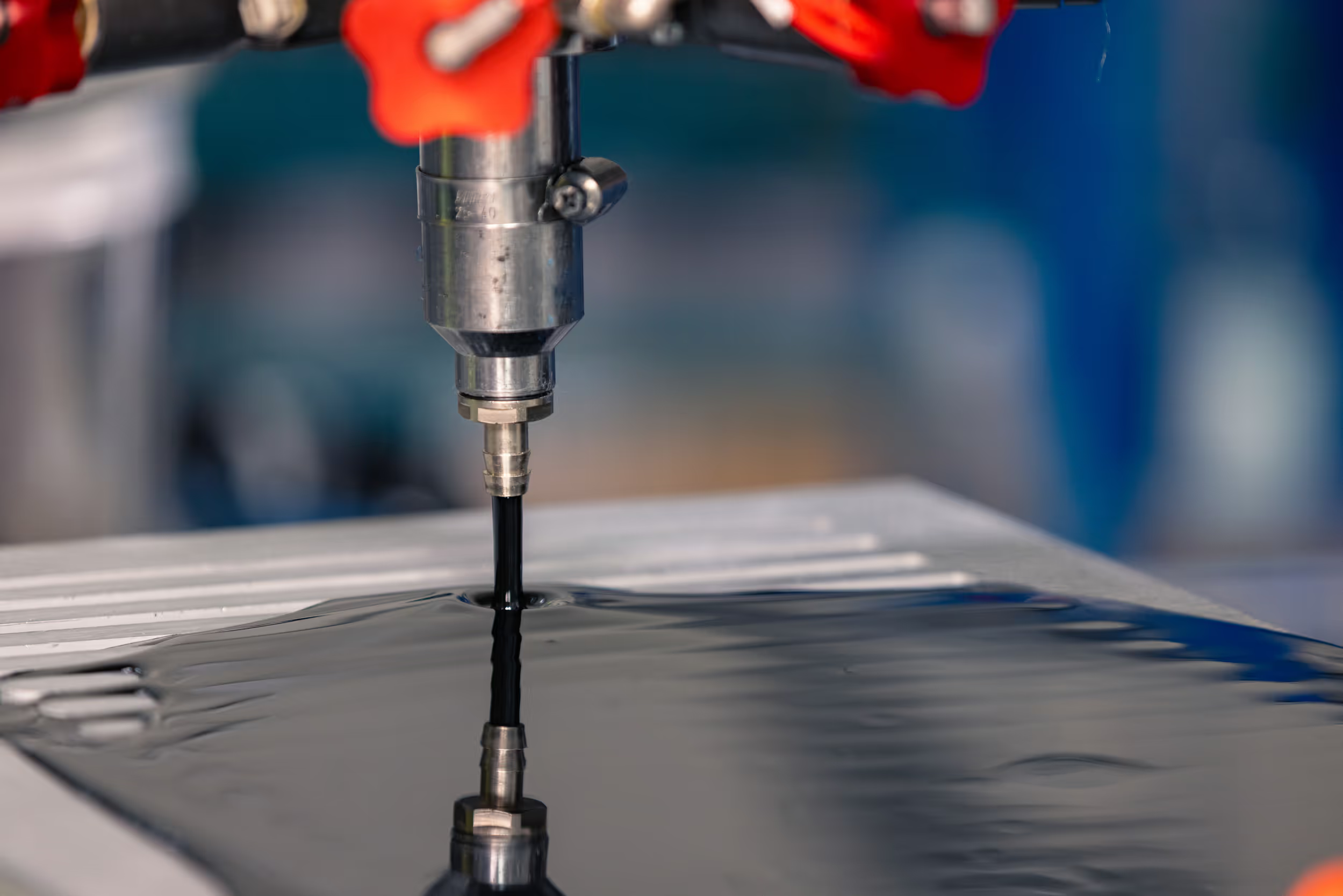
Casting
Prototypes, pre-series and small series of up to 1,000 pieces
This process enables complex components to be manufactured quickly and cost-effectively, even without high initial tool costs.

Assemblies
Small series to large series
We assemble complete components for you — including purchased parts, surface finishing and final testing. You get a ready-to-install solution from a single source.

What is injection molding? – Definition and basics
Injection molding is a thermal forming process used in plastics processing. It is one of the most frequently used production methods for manufacturing plastic components. The injection molding process is suitable for producing plastic parts for a wide variety of industries, including mechanical engineering, agricultural and conveyor technology, and the food and construction machinery industries.
Compared to extrusion, blow molding, and 3D printing, injection molding enables the economical and high-precision production of complex plastic components in large quantities starting from 1,000 units. While extrusion creates continuous profiles, blow molding produces hollow bodies, and 3D printing creates individual parts layer by layer, injection molding delivers maximum efficiency, dimensional accuracy, and series quality.
How injection molding works:
Step-by-step process
Structure of the injection molding machine
A modern injection molding machine consists of four central assemblies: plasticizing unit, clamping unit, mold, and control system.
The plastic granules are processed in the plasticizing unit. The core component is the screw, which conveys, melts, and homogenizes the material through rotation, and then injects it into the mold as a precisely metered plastic melt. It thus combines plasticizing and injection in a single element and is crucial for consistent component quality.
The mold determines the final geometry of the plastic component and forms the negative impression of the desired product. During the injection process, the clamping unit keeps the mold securely closed with a defined clamping force to withstand the internal pressure generated. The required clamping force of an injection molding machine is specified in kilonewtons (kN) or tons (t) and is an important criterion when designing an injection molding machine.
All process parameters such as temperature, injection speed, pressure, and cycle times are monitored and regulated via the control system. This ensures high quality standards, stable processes, and reliable series production.
The injection molding process in detail
The injection molding process is based on a recurring cycle in which plastic granules are processed into high-quality components in a precisely controlled operation. The individual process steps build directly upon one another:
- Plasticizing: Plastic granules enter the heated cylinder of the injection molding machine via a hopper. The rotation of the screw conveys, compresses, and melts the material. At the same time, the required amount of melt is metered as the screw moves backward in a controlled manner. Once the necessary amount of material is ready in front of the screw tip, the plasticizing process ends.
- Injection: The melt is then injected by the screw at high pressure through the sprue bushing into the closed mold cavity. The plastic precisely fills even complex geometries.
- Holding pressure phase: After the injection process, the melt cools and solidifies within the mold. To compensate for natural material shrinkage, a reduced pressure is maintained during this phase, allowing additional material to flow in. This process step has a significant impact on dimensional accuracy, surface quality, and the final properties of the part.
- Cooling: In the temperature-controlled mold, the plastic cools down to the required demolding temperature. The cooling phase usually represents the longest part of the entire injection molding cycle and significantly influences the cost-effectiveness of the process. During the cooling process, the screw is retracted to prepare for the next dosing.
- Ejection: Once the necessary strength is reached, the mold opens and the part is ejected using an integrated ejection system. The cycle then begins again. Finishing of the manufactured molded parts is generally not necessary.
The total cycle time typically ranges between 10 and 60 seconds, depending on part size, wall thickness, material, and mold design. When processing thermoplastics, the mold is generally cooled. In contrast, when working with elastomers and thermosets, the mold must be heated.
Injection molding materials:
Which plastic for which requirement?
Thermoplastics, also known as thermoplastic polymers, are the most frequently used materials in injection molding. They can be melted by heating, shaped, and then solidified again. Since this process is reversible and can be repeated multiple times, thermoplastics are considered particularly cost-effective and highly recyclable. Due to their versatile properties, they represent the dominant material group in plastic injection molding.
Thermoplastics – the most common material in injection molding
The most important thermoplastics include:
TPU (Thermoplastic Polyurethane)
Highly elastic, abrasion-resistant, and durable – ideal for technical molded parts, seals, and protective elements.
ABS (Acrylonitrile Butadiene Styrene)
Impact-resistant plastic with a high-quality surface finish for covers and housings.
ASA (Acrylonitrile Styrene Acrylate)
UV and weather-resistant for durable outdoor applications.
PP (Polypropylene)
Lightweight and chemical-resistant material for housings, containers, and technical industrial components.
PA (Polyamide)
High strength and wear resistance, frequently used for gears, bearings, and machine elements.
PC (Polycarbonate)
Particularly impact-resistant and transparent, ideal for visible parts, protective covers, and technical components.
POM (Polyoxymethylene)
High dimensional accuracy and sliding properties for precision parts in mechanical engineering.
PE (Polyethylene)
Tough, moisture-resistant, and ideal for containers, covers, and industrial components.
PBT (Polybutylene terephthalate)
Dimensionally stable, wear-resistant, and electrically insulating engineering plastic with high dimensional accuracy – ideal for connectors, housings, and sensor components.
The choice of the appropriate material depends on the requirements of the specific component. INTERNORM Kunststofftechnik GmbH processes more than 50 different plastics and supports customers in selecting the optimal material. Custom or new materials can also be tested and qualified for the application if required.
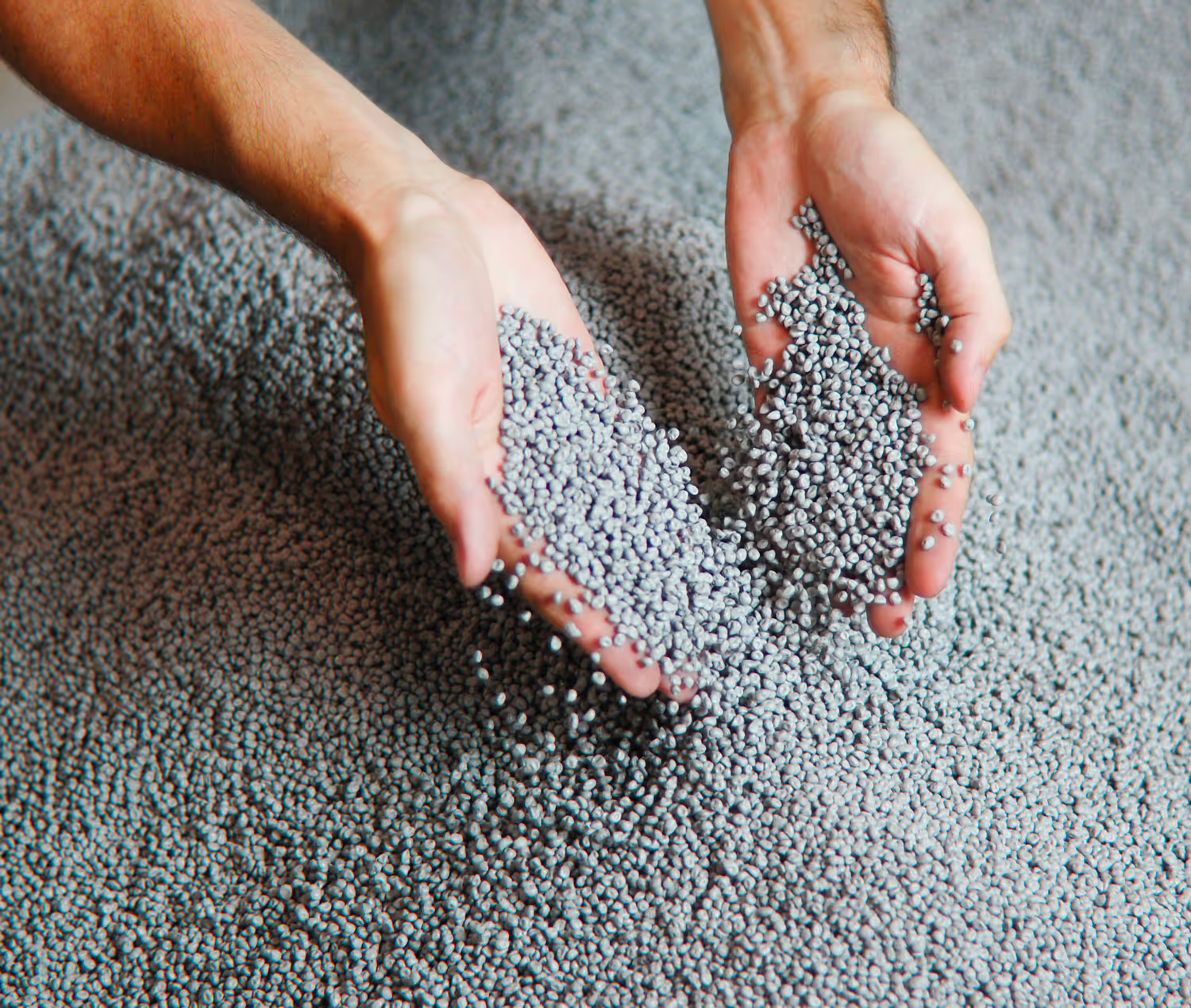
Thermosets – Injection molding for permanently dimensionally stable parts
Thermosets are plastics that permanently cross-link through a chemical reaction during processing. Once cured, they cannot be remelted or reshaped, but they are characterized by high dimensional stability, excellent thermal stability, and good electrical insulation properties.
This makes them particularly suitable for demanding applications in electrical engineering, such as connectors, switch housings, or high-temperature components. Unlike thermoplastic injection molding, thermoset injection molding involves heating the mold to trigger the cross-linking reaction and cure the part. This results in different process parameters and mold concepts.
Elastomers – Flexibility and Sealing in Injection Molding
Elastomers are plastics with rubber-like elastic behavior that can deform significantly under load and then return to their original shape. Due to their high elasticity, extensibility, and sealing properties, they are particularly suitable for technical applications such as seals, damping elements, protective components, and grip elements in industrial systems. Unlike thermoplastic injection molding, processing involves vulcanization in a heated mold. During this process, the material is cross-linked, giving it its characteristic elastic properties. This results in durable components with high resistance to mechanical stress and environmental influences.
Advantages of the injection molding process for industry
For companies requiring precise and cost-effectively manufactured plastic components, injection molding is one of the most powerful manufacturing processes available. Especially for series production, the process excels through high process stability, material efficiency, and short production times with consistent quality.
A key advantage is its high reproducibility. With optimized mold and process design, modern injection molding processes can achieve tolerances of up to ±0.01 mm on functionally critical components. Industrial tolerance requirements are defined based on the ISO 20457 standard, which governs tolerances and acceptance conditions for plastic molded parts.
In addition, the process offers exceptional geometric freedom. Complex components with ribs, holes, or snap-fit joints can often be produced in a single manufacturing step, reducing assembly effort and production costs.
Injection molding also sets standards in terms of material efficiency. Unlike machining processes, material is not removed from a solid block. Furthermore, sprue material can often be recycled back into the production process.
Users also benefit from a high surface quality, as many components achieve the desired structure or finish directly from the mold, eliminating the need for post-processing.
Another advantage is the scalability of the process. Since mold costs are a one-time investment, unit costs decrease as production volume increases. Combined with short cycle times—typically 10 to 60 seconds—and a high degree of automation, this enables highly economical production, from small batches to large-scale runs.
Furthermore, the injection molding process can be used to process all thermoplastics, thermosets, and elastomers. This allows injection-molded parts to be used in many different fields of application. At INTERNORM, we process over 50 different materials using injection molding, allowing us to select the ideal material for your specific application.
The Injection Mold: Design, Materials, and Costs
The injection mold – also known as the molding tool – is the central element of any injection molding production. It determines the geometry, surface quality, dimensional accuracy, and cost-effectiveness of the final plastic parts. The design of the mold therefore has a significant influence on the quality and unit costs of an injection molding project.
How much does an injection mold cost?
The costs for an injection mold start at around €1,000 for simple prototype molds. Depending on part size, complexity, mold material, and the number of cavities, production molds typically range between €5,000 and over €100,000. Higher mold costs can be economically justified by lower unit costs and longer tool life.
Structure of an injection mold
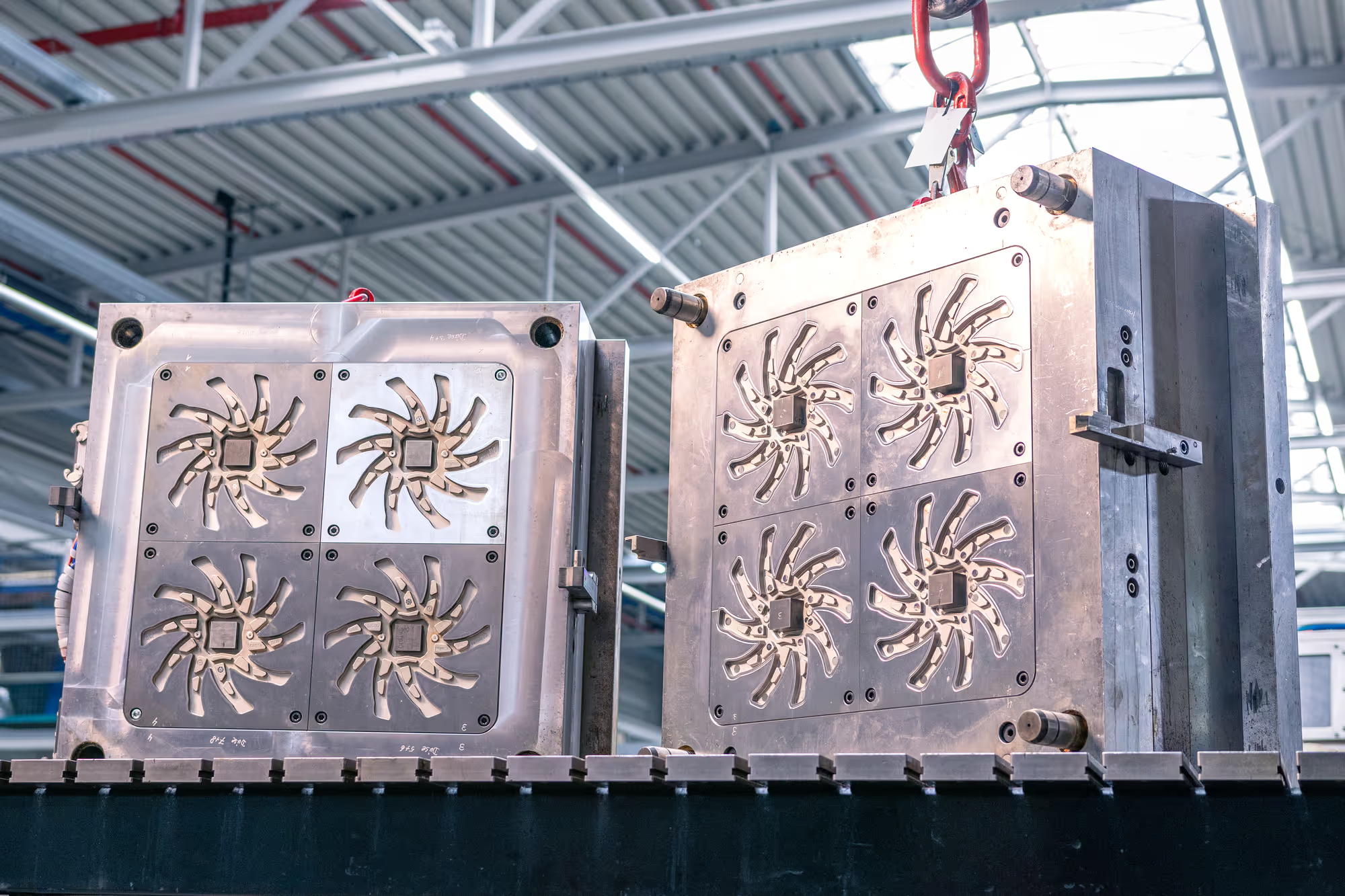
An injection mold essentially consists of a nozzle side and an ejector side. Between the two mold halves is the cavity, which forms the negative impression of the final part. The molten plastic enters the mold via the gating system. Integrated cooling channels ensure controlled temperature management, while ejectors remove the finished part from the mold after it has solidified.
Comparing mold materials
The choice of mold material depends primarily on the planned production volume and technical requirements:
Aluminum molds can be produced particularly quickly and cost-effectively, while hardened steel molds offer maximum durability and process reliability. For many industrial applications, pre-hardened tool steels represent an economical compromise. With in-house design and mold making, INTERNORM Kunststofftechnik GmbH ensures maximum flexibility and short communication channels throughout the entire development and manufacturing process. Adjustments can be implemented quickly, mold concepts optimized at an early stage, and projects efficiently supported from the initial part idea to series production.
Single- and multi-cavity molds
In addition to the material, the number of cavities also influences cost-effectiveness. A single-cavity mold produces one part per cycle, while a multi-cavity mold manufactures several identical parts simultaneously. Although mold costs increase with the number of cavities, unit costs decrease significantly for larger production volumes.
When planning an injection molding project, it is advisable to consider the total costs over the entire product lifecycle. Higher-quality molds often pay for themselves after a relatively short time through lower unit costs, higher output volumes, and longer tool life.
Injection molding costs: What is the real price of the process?
The costs of an injection molding project are composed of several factors and should always be viewed over the entire product life cycle. A flat-rate price is therefore not practical, as part geometry, material, quantity, and tool design all have a decisive influence on cost-effectiveness.
The most significant cost driver is the tooling cost. These are one-time investments that depend primarily on the complexity of the part, precision and surface finish requirements, and the number of cavities in the mold.
Ongoing unit costs in injection molding are primarily determined by material volume, cycle time, machine requirements, and potential scrap rates. For larger production volumes in particular, the cost per part drops significantly as tool costs are spread across a higher number of units.
Design for Manufacturing (DfM) can significantly improve the economic viability of an injection molding project. Optimized wall thicknesses, material-efficient geometry, and production-friendly designs reduce material consumption and cycle times, thereby lowering unit costs in series production.
Compared to processes like milling or 3D printing, injection molding truly excels when it comes to recurring demand. As a rough rule of thumb, the process often becomes cost-effective starting at around 500 to 1,000 parts per year. However, actual cost-effectiveness always depends on the specific requirements of the project.
The most important levers for cost reduction include:
- increasing the number of cavities
- die Optimierung des Angusssystems
- Verkürzung der Zykluszeit.
Practical example: Impact of quantity on part costs
*Example value including material, machine, and labor costs.
Although the injection mold costs €10,000 in both cases, the tooling cost per part drops from €20.00 to just €0.20. As the quantity increases, the fixed costs are spread across more parts, which is where injection molding demonstrates its economic advantages, particularly in mass production.
To provide a reliable calculation, we assess every project individually and work with our customers to develop a technically and economically optimal solution. For a concrete cost estimate, we recommend submitting a non-binding inquiry.
Even minor improvements in these areas can unlock significant savings potential for series production projects.

Injection molding for small batches and prototypes
Injection molding is often associated with high volumes, but it also offers economic advantages for small production quantities. Especially for functional prototypes, pre-series, approval testing, or the market launch of new products, small-batch injection molding can be a sensible alternative to other manufacturing processes.
Rapid tooling plays an important role here. This involves using molds made of aluminum or soft steel, which can be produced faster and more cost-effectively than traditional production molds. As a result, initial parts can be manufactured and tested within a short timeframe. For the transition phase between prototyping and mass production, so-called bridge tooling solutions are frequently used. These bridge molds allow for the production of initial market and pilot batches before investing in a full-scale production mold.
Depending on the application, small-batch production typically refers to quantities between 50 and 5,000 parts. While tooling costs have a relatively high impact on total costs in this range, the process is often still a sensible choice. The decisive advantage is that early parts can be manufactured using the final production material.
For particularly small quantities and new product launches, INTERNORM Kunststofftechnik GmbH also offers the PUR casting process. Due to the low tooling costs, this method is particularly suitable for prototypes, pre-series, and market tests before transitioning to series injection molding.
Compared to 3D printing, injection molding offers the advantage that the manufactured components already correspond to the final series product in terms of material and properties. This creates a reliable basis for functional testing, approvals, and certification processes.
Whether for a prototype, pre-series, or small batch starting from 50 units – INTERNORM Kunststofftechnik GmbH supports your project through to series production readiness and works with you to develop the most economically viable manufacturing solution.
Quality assurance and tolerances in injection molding
The dimensional accuracy of injection-molded parts is a decisive factor for the function and assembly capability of components. Depending on the component geometry, material, and process control, very precise results can be achieved in injection molding. For standard applications, tolerances of ±0.05 to ±0.2 mm are typically achieved.
To ensure consistently high quality, modern plastics engineering relies on comprehensive process and quality monitoring. Depending on the requirements, dimensional measurements, visual inspections, and further testing procedures are carried out. For particularly demanding applications, quality inspections using a coordinate measuring machine (CMM) can also be performed to precisely verify dimensional accuracy and geometry.
The achievable accuracy is influenced by various factors. These include, in particular, the material-dependent shrinkage of the plastic, which typically lies between 0.3 and 2% depending on the material, as well as mold temperature, holding pressure time, and the wall thickness of the component. Even minor changes to these parameters can affect dimensional accuracy, dimensional stability, and component properties.
In mechanical and plant engineering in particular, precise tolerances are often indispensable. Whether for bearing seats, positive-locking connections, sealing surfaces, or assembly-critical plastic components – the quality of every single part contributes significantly to the function of the entire assembly.
Injection molding tool relocation
Reliable injection molding production requires stable processes, precise tools, and an experienced manufacturing partner. When suppliers fail, capacity is lacking, or quality issues arise, tool relocation can be the right solution. This involves securely transferring an existing injection mold to a new manufacturing partner so that your production can continue quickly and reliably.
INTERNORM provides comprehensive support for your injection molding tool relocation—from the initial analysis and technical assessment of the tool to the takeover, maintenance, and potential optimization, all the way to sampling and serial production. We review existing drawings, CAD data, and other documentation to establish the prerequisites for a seamless tool transfer.
Thanks to our in-house tool shop, necessary repairs, adjustments, and maintenance work can be carried out directly at INTERNORM. After taking over the tool, we produce initial samples and carefully inspect them for dimensional accuracy, function, and quality. Serial production of your plastic components only begins once all requirements have been met.
With modern injection molding technology, structured quality processes, and extensive experience in plastics processing, INTERNORM ensures secure tool relocation and stable supply capability. This allows you to protect existing tool investments, reduce production risks, and maintain the quality of your components—even when changing suppliers or relocating production.
Conclusion – Injection molding as a process for industrial plastic parts
Injection molding is the most cost-effective method for producing reproducible plastic parts with complex geometries, ranging from small batches to large-scale production. Thanks to high dimensional accuracy, short cycle times, and comprehensive automation, technical components can be produced efficiently and with consistent quality.
The key to project success lies in selecting the right material and designing the tool to meet specific requirements. Whether using thermoplastics, thermosets, or elastomers, material properties, tool design, and process parameters significantly influence quality, cost structure, and production efficiency.
Particularly in mechanical and plant engineering, the injection molding process stands out for its tight tolerances, high repeatability, and reliable production of mission-critical components for demanding assemblies.
INTERNORM Kunststofftechnik GmbH supports you from the initial idea to series production. Even without a finished drawing, we assist you with component design, material selection, engineering, and the development of a cost-effective manufacturing solution for your application.
FAQ – Frequently Asked Questions about Injection Molding
Here you will find direct answers to frequently asked questions about our products.
What is injection molding?
Injection molding is a manufacturing process for plastic parts in which molten plastic granules are injected into a closed mold under high pressure. After cooling, the finished part is ejected. The process is particularly suitable for the series production of parts with complex geometries and reproducible dimensions.
Which material is suitable for injection molding?
The most common injection molding materials are thermoplastics such as PP, ABS, PA, PC, and POM—they can be melted repeatedly and are suitable for the majority of industrial applications. Thermosets and elastomers are used for special requirements regarding temperature resistance or elasticity. The choice of material depends on the mechanical, chemical, and thermal requirements of the part.
How does the injection molding process work?
In injection molding, plastic granules are melted in a heated cylinder and injected into a closed mold cavity by a screw. After a holding pressure phase, the material cools down in the mold and is then removed as a finished part by ejectors. Depending on the part, a complete cycle typically takes 10 to 60 seconds.
How precise is injection molding?
In standard applications, injection molding achieves tolerances of ±0.1 to ±0.2 mm. With optimized process control, cavity pressure monitoring, and high-quality tool steels, precision tolerances of ±0.01 to ±0.05 mm are possible.
How much does it cost to manufacture injection molded parts?
Costs are divided into tooling costs and unit costs (depending on material, cycle time, and quantity). From approximately 1,000 units per year, injection molding is more economical than alternatives such as CNC milling or PUR casting. For reliable calculations, we recommend requesting an individual quote.
What is the difference between injection molding and the injection molding process?
There is no difference in meaning – both refer to the same process. "Spritzgießen" is the correct technical term according to DIN standards, while "Spritzguss" is more commonly used in everyday language and in quotes. Both terms are used synonymously on this page.
Get in touch with us!
Andreas Wehming
Product Manager Injection Moulding
Telephone:
+49 5491 9691-0Email:
sales@internorm.de